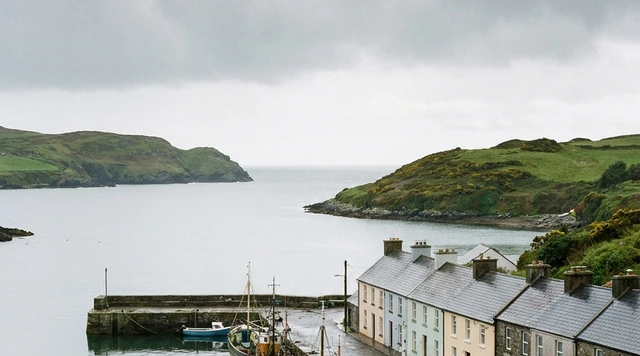
AI illustration
 Written and edited by
 A permit is usually described as the thing standing between you and a place. Checked against the documents, it is more often the thing standing between the place and its own destruction — and the numbers are specific enough to argue with. Son Doong admits 1,000 people a year. Skellig Michael admits about 180 a day. Antarctica allows 100 ashore at once. Uluru admits nobody to the summit at all.
What this is, and how it was checked
This is desk research. Nobody from this publication has been to Son Doong, Skellig Michael, Socotra, Machu Picchu, Antarctica or Bhutan. Everything below comes from the bodies that issue the permits — park services, culture ministries, UNESCO state-of-conservation reporting, the Office of Public Works, the operators' own trade association — and where those bodies disagree with the travel press, both figures are given.
The argument is simple and testable: the restrictions are the reason there is anything left to visit, and the correct response to a closed door is to respect it rather than look for the side entrance. What follows is the evidence, and then the places where it does not hold.
Twelve regimes, with their numbers
Son Doong, Vietnam — the hard cap
The largest cave passage on earth is nearly nine kilometres long, up to 200 metres high and 160 wide, with a measured volume of 38.5 million cubic metres. It was found by Ho Khanh in December 1990, first entered on 7 April 2009, and opened to paying visitors in 2014. Access is a six-day, five-night expedition costing USD 3,000 per person, with a maximum of ten guests per departure. Oxalis Adventure states plainly that it is the only company authorised to operate tours into the cave, and that permits are capped at 1,000 visitors a year. As of August 2026 the 2027 season is listed as fully booked — which is to say the queue is running about eighteen months ahead of the traveller.
One detail most write-ups have wrong: the licensing authority. Oxalis's own account refers to approval by Quang Tri authorities. Quang Binh, the province named in nearly every English-language article about the cave, no longer exists as a separate unit — so most readers are checking permit conditions against a jurisdiction that has been superseded.
Skellig Michael, Ireland — the licensed boat
This is the most elegant cap in the set, because the visitor never touches it. There is no permit to apply for. The Office of Public Works issues fifteen non-transferable annual permits to individual boat operators, each of which may carry no more than twelve passengers per day between specified hours. Fifteen times twelve is about 180 people a day; the seasonal average was recorded at roughly 11,100 visitors.
The 2026 season runs 12 May to September, subject to weather; UNESCO's file notes the official guide service was introduced in 1987 to regulate numbers at peak hours. Geography does the rest: 618 steep and uneven steps, and no children under twelve. The cap is enforced on the supply side, so no visitor experiences it as bureaucracy. They simply find the boat is full.
Machu Picchu, Peru — the daily ceiling that keeps moving
Peru's own reporting to UNESCO sets a differentiated capacity of up to 4,500 people per day, rising to a temporary maximum of 5,600 in high season. The governing instrument is the regulation on sustainable use and tourist visitation established by Ministerial Resolution 070-2017-MC; the numbers derive from a carrying-capacity and limits-of-acceptable-change study completed in 2015.
The honest point here is instability. Peru told UNESCO that a master plan for 2025 to 2029 and an updated visitation regulation were in final development, and circuits, time slots and which ticket admits you to which terrace have been reorganised repeatedly. Treat anything printed about Machu Picchu circuits as provisional.
Half Dome, United States — the cap made explicit
Yosemite publishes the cleanest arithmetic of any site here. A maximum of 300 hikers a day is allowed beyond the base of the subdome: about 225 day hikers and 75 backpackers. The preseason lottery runs 1 to 31 March with 225 permits available for each day, and daily lotteries run in season on a two-day window. It costs ten dollars to apply, non-refundable, and ten dollars per person if you win. That structure separates the two functions price alone confuses: the lottery rations, the fee only covers administration. Nobody buys their way past the 300.
Lascaux and Altamira — the original closed, the copy opened
Lascaux was discovered in 1940. UNESCO records that conservation threats to the paintings had already led to the closure of the cave to the public in 1963, and that a biological proliferation in 2000 renewed the crisis. The solution was replication: Lascaux IV, the International Centre for Cave Art at Montignac, opened in 2016 with a new facsimile.
Altamira is the same logic under a stricter conservation plan: UNESCO's file records that access is limited and that, in caves open at all, visits are restricted to guided groups. We could not reach Spain's culture ministry pages, so we do not repeat the widely circulated figure for how many people the cave admits each week by draw; see the note at the end. What both cases establish is that a replica is not a consolation prize. It is the mechanism that makes a cap of effectively zero politically survivable.
Uluru, Australia — the closure decided by the people who own it
The climb closed on 26 October 2019, on a decision taken unanimously by the park's Board of Management in November 2017, two years ahead. The board has a majority of traditional owners because the deeds were handed back to Anangu on 26 October 1985, and the closure date was chosen as the thirty-fourth anniversary of that handback. Anangu had been asking visitors not to climb since the 1990s, with signs at the base reading Please Don't Climb. The climb was not closed because the rock was wearing out. It was closed because the owners said no, and were at last in a position to be heard.
Antarctica — an industry capping itself
There is no government at the bottom of the world to issue tickets, so the operators wrote the rules. Two, dating from between 1993 and 2001, still govern every landing: the 100 Passengers Ashore Bylaw and the 20:1 guide-to-passenger ratio.
The scale is not small. In 2025-26, 68 ships and yachts made 579 voyages carrying 112,894 people, of whom 85,195 landed and 27,217 saw the continent from the vessel only; 1,106 more went to the deep field. The preliminary estimate for 2026-27 is 105,461. The association has 140 members, 54 of them operators.
Self-regulation deserves scepticism. But these numbers are published annually to the Antarctic Treaty meeting under the association's name, a harder discipline than most park services accept.
Socotra, Yemen — friction as a warning, not a filter
This is where the romance of the sponsored visa needs correcting, and our own previous version of this guide is part of what needs it. The United States rates Yemen, explicitly including Socotra, at Level 4: Do Not Travel, and says something sharper than a general warning: that some companies outside Yemen have misrepresented the island's safety and offer trips with unofficial and invalid visas, and that only the Republic of Yemen government can issue a valid Yemeni visa. The British advice is blanket — against all travel to the whole of Yemen, updated 31 July 2026 — with a visa required through the Yemeni embassy.
Treating that as a picturesque hurdle to be solved by choosing an ethical sponsor is a category error. Some friction is not a conservation mechanism at all. It is a state failure, and the paperwork being sold to tourists may not be paperwork.
Galapagos, Bhutan, Everest and Venice — the price cases
Four regimes that use money rather than a ceiling, and are the hardest test of the argument.
- Galapagos. USD 200 for a foreign visitor aged twelve or over, USD 100 for under-twelves, USD 100 for CAN and Mercosur nationals, USD 30 for Ecuadorians aged twelve to sixty-four. The instrument in force is Provincial Ordinance No. 001-CGREG-30-06-2025.
- Bhutan. The Sustainable Development Fee is USD 100 per adult per night, USD 50 for children aged six to eleven, free under six, Nu. 1,200 for Indian nationals — a fifty per cent discount on the prevailing rate of USD 200, announced 25 August 2023, effective 1 September 2023 and running to 31 August 2027.
- Everest. Nepal's mountaineering regulations as published by the Department of Tourism set the royalty for the normal south-east ridge at USD 11,000 in spring, 5,500 in autumn and 2,750 in winter and monsoon; other routes at 10,000, 5,000 and 2,500. See below.
- Venice. EUR 5 if registered by the fourth day before arrival, EUR 10 within the three days before, payable by day visitors not paying the overnight tourist tax, with under-fourteens free. The 2026 trial ran from 3 April and ended on 27 July 2026.
The distinction that matters: a ceiling, or a price
Lay the twelve regimes side by side and they sort into two piles, only one of which does what the travel press thinks all of them do.
A ceiling is a number nobody can exceed at any price: 1,000 a year at Son Doong, 180 a day on Skellig, 300 on Half Dome, 4,500 at Machu Picchu, 100 ashore in Antarctica, zero at Lascaux and on the Uluru climb. Each has a physical relationship to the thing being protected — a cave's air chemistry, an island's step count, a subdome's cable line. Wealth cannot move them. The billionaire and the graduate student join the same queue, and at Son Doong that queue is eighteen months long for both.
A price has no ceiling. Galapagos can admit an unlimited number of people at USD 200 each; Bhutan an unlimited number at USD 100 a night; Venice could have admitted the whole of Lombardy at EUR 10 a head. Nepal has never capped Everest at all, only made the royalty larger. Price is a revenue instrument whose sorting effect is a side-effect, and it sorts by wealth, which is not the same as by care.
A cap says: only this many, whoever you are. A price says: as many as can pay. These are not two strengths of the same policy. They are opposite policies that happen to look alike from the queue.
Price does real work — the Galapagos fee is distributed to institutions on the islands. But a fee is a tax on visiting, not a limit on it, and any guide presenting the two as one kind of friction, as our earlier version did, is misleading its readers.
Where the argument fails: Bhutan, 2022 to 2023
The strongest counter-example here is not a cap that was breached. It is a price set too high and withdrawn.
Bhutan reopened on 23 September 2022 with the Sustainable Development Fee raised to USD 200 per person per night, presented at the time as the world's most serious commitment to high-value, low-volume tourism. Less than a year later, on 25 August 2023, the government announced a fifty per cent discount on that fee, effective 1 September 2023 and running to 31 August 2027.
Read the sequence honestly. A sovereign government imposed the highest-friction pricing regime in world tourism, halved it within twelve months, called the reduction an incentive, and attached a four-year sunset with an explicit right to reassess. That is not a state confident its friction was working. The plausible reading is that arrivals came in below what the tourism economy — guides, drivers, hotels, the farms supplying them — could survive.
We could not obtain Bhutanese arrival statistics for 2022 to 2025 to quantify the shortfall, so we present the reversal as evidence and stop there. It is enough to mark the limit of the thesis: friction that preserves a place can still impoverish the people living in it. A fee high enough to protect a landscape can be high enough to hollow out the economy that maintains it, and anyone arguing for more restriction — this publication included — owes that an answer.
What popular coverage gets wrong
Three specific, checkable errors, all of them common in the last year of travel writing.
First: Venice does not charge tourists to enter. The standing headline is wrong four times over. The contribution applied only to day visitors not already paying the overnight tourist tax; only on selected days within a window; never to under-fourteens, Veneto residents, students, workers or property-tax payers; and since 27 July 2026 not at all. A story about a city closing itself off is being told about a day-tripper surcharge with a stop date.
Second: the permit is usually not yours to obtain. Permits framed as forms the traveller must fight through describe almost none of the regimes above. On Skellig Michael the permit is held by a boatman and the visitor buys a seat; at Son Doong the licence belongs to the operator; in Antarctica the constraint is a trade-association bylaw the passenger never sees. The friction is doing the work, but it sits upstream, on supply, where the traveller cannot argue with it. Coverage that treats a cap as a personal obstacle has mistaken the obstacle's address.
Third: the book-before-it-is-gone reflex is backwards. The urgency travel media generates around capped sites converts a conservation measure into a sales trigger and increases the pressure the cap exists to relieve. The genuinely scarce sites here are not becoming more accessible in a hurry: Son Doong's 2027 departures are sold out, Lascaux has been closed for sixty-three years with no proposal to reopen it, and the Uluru climb was closed by the people who own the rock and will not reopen because demand returns. Urgency is the right response to a place being opened up, not to one being closed.
Where the sources disagree
Nepal's Everest royalty. It has been widely reported that Nepal raised the spring south-route permit from USD 11,000 to USD 15,000 from 1 September 2025. The consolidated regulations on the Department of Tourism's own site still show USD 11,000, with amendments listed only to the fifth, of 2074 in the Nepali calendar; a sixth amendment appears in the rules index but its text was not retrievable. So: 11,000 is what the government publishes, 15,000 what it is reported to have decided. Budget for the higher figure.
The Galapagos increase date. The rise to USD 200 is generally dated to 1 August 2024. The instrument the park directorate publishes is Provincial Ordinance No. 001-CGREG-30-06-2025, dated 30 June 2025, and we could not confirm the 2024 date or the superseded ordinance from a Galapagos government source. The current amount is solid; the history is not.
Saying no to yourself
Everything above argues for a habit rather than a rule, and the habit is unglamorous: check the issuing body, not the aggregator. Here, the operator's site was right about Son Doong's cap while every secondary account was wrong about its province; UNESCO's file was the only place carrying Skellig's arithmetic; and Nepal's department of tourism contradicted the world's press about Everest.
The practical residue is short. Verify permit terms within thirty days of booking, because they move. Read your government's advisory rather than its headline, and check your insurance covers the level it names. Ask an operator in writing what share of the fee stays on the ground. And when the only route in runs around a cap, a closure or a community's stated wish, do not take it, and do not publish it.
That last one is the whole discipline. The list of places you decided not to go is not a record of failure. On this evidence it is the only contribution most visitors are in a position to make.
Corner Codex — M-002
- Applies to
- Every dossier on this site
- Cases checked
- 12 access regimes, each with a primary source and a number
- Hardest cap found
- Son Doong: 1,000 permits a year, one licensed operator, 2027 sold out
- Tightest daily ceiling
- Skellig Michael: 15 boat permits x 12 passengers = about 180 a day
- Largest capped site
- Machu Picchu: 4,500 a day, 5,600 in high season
- Self-imposed limit
- Antarctica: 100 passengers ashore at once, 20 passengers per guide
- Closed outright
- Lascaux since 1963; the Uluru climb since 26 October 2019
- Price without a cap
- Galapagos USD 200; Bhutan USD 100 a night; Venice EUR 5 or 10 a day
- Update cycle
- Permit terms age fast. Verify everything within 30 days of booking
- Sources
- 26 primary references; 6 items we could not verify
- Silence Index
- — not scored. This is a method note, not a place
Sources & further reading — checked
- Oxalis Adventure — Son Doong Cave Expedition. The annual cap of 1,000 permits; USD 3,000 per person for six days and five nights; a maximum of ten guests per departure; Oxalis as the only company authorised to operate tours into the cave; and the 2027 season listed as fully booked
- Oxalis Adventure — Son Doong Cave. Cave dimensions of nearly 9 km length, 38.5 million m3 volume, 200 m height and 160 m width; discovery by Ho Khanh in December 1990; first expedition on 7 April 2009; pilot tours in August 2013 and commercial launch in 2014; and approval by Quang Tri authorities
- Office of Public Works, Heritage Ireland — Sceilg Mhichil. The 2026 season running 12 May to September subject to change; the list of fifteen permitted boat operators for 2026; access only through permit-holding boat operators; the 618 steps; and the exclusion of children under twelve
- UNESCO World Heritage Centre — Report on the Mission to Skellig Michael, 26-28 November 2007. Fifteen non-transferable annual landing permits issued to individual boat operators; no more than twelve passengers per operator per day; a daily cap of about 180 people; an average of roughly 11,100 visitors per season; and a season of late May to late September
- UNESCO World Heritage Centre — Sceilg Mhichil (Ireland), inscription file. The annual permit system for boatmen, the discouragement of private craft, the prohibition on access outside the defined season, and the introduction of the official guide service in 1987 to regulate visitor numbers at peak hours
- UNESCO World Heritage Centre — Sceilg Mhichil, state of conservation 2010. The Committee's request for a visitor carrying-capacity study, establishing that the daily figure in use had not at that point been derived from a formal capacity assessment
- UNESCO World Heritage Centre — Sceilg Mhichil World Heritage Property Management Plan 2020-30. The management team's stated intention to maintain strict control over the means of access and the number of visitors allowed
- UNESCO World Heritage Centre — Historic Sanctuary of Machu Picchu, state of conservation 2026. The regulation on sustainable use and tourist visitation setting a maximum of 4,500 visitors a day and a temporary maximum of 5,600 a day in high season, as reported by Peru
- UNESCO World Heritage Centre — Historic Sanctuary of Machu Picchu, state of conservation 2024. The differentiated capacity of up to 4,500 a day rising to 5,600 in high season; its basis in the 2015 carrying-capacity and limits-of-acceptable-change study; Ministerial Resolution 070-2017-MC; and the master plan for 2025-2029 then still in development
- US National Park Service — Half Dome permits, Yosemite National Park. A maximum of 300 hikers a day beyond the base of the subdome, about 225 day hikers and 75 backpackers; the preseason lottery of 1-31 March with 225 permits a day; the two-day daily lottery window; and the USD 10 application and USD 10 per person fees
- UNESCO World Heritage Centre — Prehistoric Sites and Decorated Caves of the Vezere Valley. The closure of Lascaux to the public in 1963 on conservation grounds, the biological proliferation of 2000, state ownership and the International Centre for Cave Art at Montignac housing a new replica
- Ministere de la Culture, France — Lascaux. Discovery of the cave in 1940 and the opening of Lascaux IV, the International Centre for Parietal Art, in 2016 as the means of public access to otherwise inaccessible works
- UNESCO World Heritage Centre — Cave of Altamira and Paleolithic Cave Art of Northern Spain. Management of the Altamira cave by Spain's Ministry of Culture through the National Museum and Research Centre of Altamira; the preventive conservation plan; and access limitations restricting visits to guided groups
- Parks Australia / Uluru-Kata Tjuta National Park — Uluru climb closure. The closure of the climb on 26 October 2019; the unanimous decision of the park's Board of Management in November 2017; the Please Don't Climb signs from the 1990s; and the choice of the 34th anniversary of Handback as the closure date
- Australian Government, DCCEEW — Uluru-Kata Tjuta National Park. Declaration of the national park on 24 May 1977; the handback of the deeds to Anangu traditional owners on 26 October 1985; and joint management by a board with a majority of traditional owners
- UNESCO World Heritage Centre — Uluru-Kata Tjuta National Park. Joint management under Aboriginal title and lease, and the continuity of Tjukurpa as the basis of Anangu law and culture in the park
- IAATO — Overview of Antarctic Vessel Tourism: the 2025-26 Season (ATCM 48, IP 200 rev. 1). The 100 Passengers Ashore Bylaw and the 20:1 guide-to-passenger ratio dating from 1993-2001; 112,894 vessel-borne visitors in 2025-26 of whom 85,195 landed and 27,217 were cruise-only; 68 ships and yachts on 579 voyages; and a preliminary 2026-27 estimate of 105,461
- IAATO — Report of the International Association of Antarctica Tour Operators 2025-26 (ATCM 48, IP 194 rev. 1). Membership of 140, comprising 54 operators and provisional operators and 86 associates, and the existence of a bylaws committee maintaining the association's operating rules
- IAATO — Data and Statistics. The 2025-26 season split of 85,195 landed visits, 27,217 cruise-only visitors and 1,106 deep-field visitors, and monitoring of Antarctic tourism trends since 1991
- Direccion del Parque Nacional Galapagos — Tributo de ingreso. Provincial Ordinance No. 001-CGREG-30-06-2025 setting USD 200 for foreign visitors aged 12 and over, USD 100 for under-twelves, USD 100 for CAN and Mercosur nationals aged 12 and over, and USD 30 for Ecuadorian nationals and residents aged 12 to 64
- Department of Tourism, Bhutan — Announcements. The announcement of 25 August 2023 granting a fifty per cent discount on the prevailing SDF of USD 200, effective from 1 September 2023 for four years to 31 August 2027, with the same discount for children aged six to twelve and the continuing border-town waiver
- Department of Tourism, Bhutan — Frequently asked questions. The Sustainable Development Fee at USD 100 per adult per night, USD 50 for children aged six to eleven, no fee under six, and Nu. 1,200 per person per night for Indian nationals
- Department of Tourism, Bhutan — Bhutan Travel. Reopening to visitors on 23 September 2022 with the Sustainable Development Fee as the instrument of the high-value tourism policy
- Department of Tourism, Nepal — Mountaineering Regulations 2059 (consolidated text). The royalty schedule for Sagarmatha on the normal south-east ridge at USD 11,000 in spring, 5,500 in autumn and 2,750 in winter and monsoon, with other routes at 10,000, 5,000 and 2,500; rates for other peaks by height band; and amendments listed only to the fifth, of 2074 in the Nepali calendar
- Department of Tourism, Nepal — Rules and regulations index. The separate listing of the Mountaineering (Sixth Amendment) Regulations, 2081, whose text was not retrievable and which is the presumed vehicle for the reported royalty increase
- Comune di Venezia — Contributo di accesso, frequently asked questions. The tiered access contribution of EUR 5 for registrations made by the fourth day before arrival and EUR 10 within the three preceding days; application to day visitors not paying the stay tax; free access for under-fourteens; and the exemption categories
- Comune di Venezia — Contributo di accesso. The statement that the 2026 trial of the access contribution has ended and that from 27 July 2026 the contribution does not apply
- US Department of State — Yemen Travel Advisory. Level 4 Do Not Travel covering Socotra; the warning that companies outside Yemen have misrepresented the island's safety and offer trips with unofficial and invalid visas; and the statement that only the Republic of Yemen government can issue valid Yemeni visas
- UK Foreign, Commonwealth and Development Office — Yemen travel advice. Advice against all travel to the whole of Yemen on grounds of unpredictable security conditions, last updated 31 July 2026
- UK Foreign, Commonwealth and Development Office — Yemen entry requirements. The requirement for a visa to enter Yemen and the direction to apply through the Yemeni embassy, with no separate Socotra permit route described
Official and scientific bodies are the authority for safety, regulatory and scientific claims. Commercial operators are used only for practical detail such as tour length, meeting points and indicative pricing — never for a safety or scientific statement.
How this was made
Desk research. Compiled from official bodies, scientific and conservation sources, established journalism and licensed operators. Not based on a personal visit.
Editor’s method note — what we checked, corrected and could not verify
- Desk research only. Nobody from this publication has visited any of the twelve places discussed. Every figure was taken from the body that issues or enforces the restriction: national park services, culture ministries, the Office of Public Works, UNESCO state-of-conservation reporting, the Galapagos park directorate, Bhutan's Department of Tourism, Nepal's Department of Tourism, the Comune di Venezia, and IAATO's annual papers to the Antarctic Treaty Consultative Meeting.
- The previous version of this guide asserted its thesis with almost no verifiable specifics: one approximate cap figure, one province name, one season. This rebuild replaces assertion with twelve documented regimes, each carrying a number and a primary source.
- The most consequential correction is conceptual. The earlier version treated caps, sponsors, seasons, guide requirements and roads as five varieties of one thing. They are not. A cap has a ceiling that money cannot move; a fee has no ceiling at all and sorts by wealth as a side-effect. Galapagos, Bhutan, Venice and Everest are priced, not capped, and we now say so.
- The Socotra passage has been rewritten against the source documents rather than against the idea of a sponsored visa. The US advisory rates the island Level 4 and warns specifically that operators outside Yemen sell unofficial and invalid visas; the UK advises against all travel to the whole country. Presenting that as an access hurdle to be navigated ethically was wrong, and we have said what the advisories actually say.
- The Son Doong licensing authority has been corrected. Oxalis's own account refers to approval by Quang Tri authorities; Quang Binh, named in almost all English-language coverage, no longer exists as a separate province, so permit conditions are being checked against a jurisdiction that has been superseded.
- Two conflicts are left visible rather than resolved. On Everest, the reported royalty of USD 15,000 from 1 September 2025 is not reflected in the consolidated regulation published by Nepal's Department of Tourism, which still shows USD 11,000 for spring on the south-east ridge; both figures and both origins are named in the text. On Galapagos, the current amount is confirmed but the commonly cited increase date of 1 August 2024 is not, because the instrument now published is dated 30 June 2025.
- The counter-example was sought deliberately rather than avoided. Bhutan raised the Sustainable Development Fee to USD 200 on reopening in September 2022 and halved it twelve months later with a four-year sunset. We present the reversal itself as the evidence that price-based friction can impoverish the people it is meant to protect, and we do not claim a magnitude we could not source.
- Things we could not verify: the current visitor arrangements for the original Altamira cave, because Spain's culture ministry domains could not be reached and we decline to repeat the widely circulated weekly draw figure without them; the text of Nepal's Mountaineering (Sixth Amendment) Regulations, 2081, and therefore the USD 15,000 Everest royalty and its commencement date; the Galapagos ordinance that preceded No. 001-CGREG-30-06-2025 and the exact date the USD 200 rate began; Bhutanese tourist arrival figures for 2022 to 2025, which would quantify the effect of the Sustainable Development Fee; the current Machu Picchu circuit and route structure and the status of the 2025-2029 master plan, neither of which was retrievable from Peru's ticketing or ministry systems; the number of days on which Venice's access contribution actually applied in 2026 and any published data on how many people paid it; the daily quota and lottery split for Coyote Buttes North, which the Bureau of Land Management page does not state; and whether Son Doong's 1,000-permit cap has been revised since the transfer of the licensing province, which no Vietnamese government source we could open confirms either way.
AI is used to draft this text, and a human checks it. Every figure, date and quotation above was verified by Tony Hall against the source cited for it in the reference list; where sources disagree, the disagreement is shown rather than resolved, and where a claim could not be confirmed it is either marked unverified or left out. The illustrations are AI-created and labelled as such — no photograph on this site is presented as a record of a real place. Full disclosure · Editorial policy.
Access details change — recheck before you travel. Found an error? Tell us — corrections are dated and shown in place.