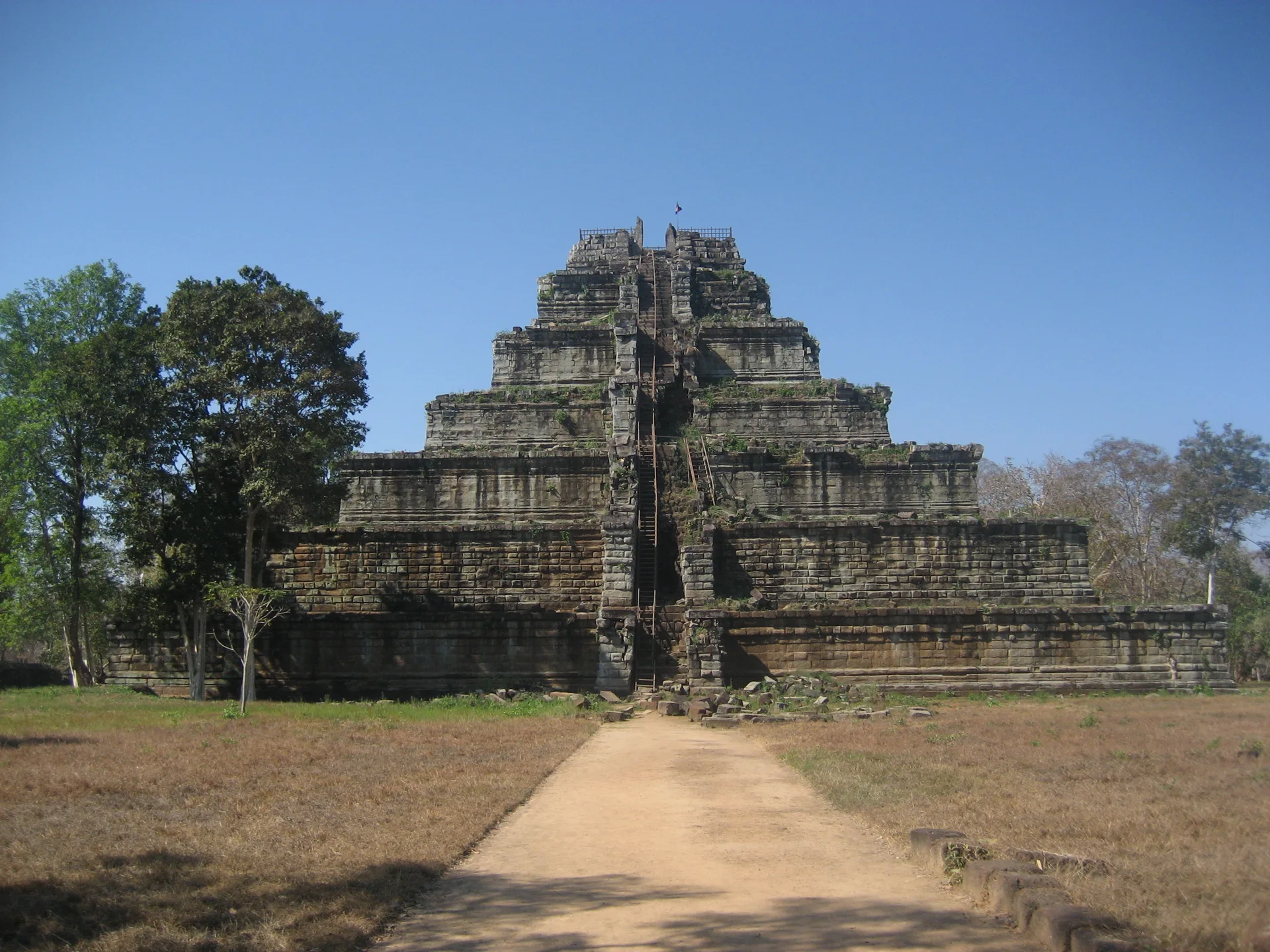

A short royal chapter, a longer inhabited landscape
UNESCO identifies Koh Ker as the archaeological site of ancient Lingapura or Chok Gargyar. Its World Heritage account places the capital period between 921 and 944 CE: first alongside Angkor as a rival centre, then as the sole capital from 928. It associates the city with Jayavarman IV and emphasises the unusual scale and artistic ambition of its building programme. These are useful reference points, not a complete biography of the settlement. UNESCO property record.
Precise dates vary across published accounts. The Cambodian Ministry of Culture and Fine Arts presents the principal capital period as 928–941, while the World Heritage summary uses the broader chronology above. For a visitor, the responsible approach is to identify the source being followed rather than silently blend the dates into a false consensus. The central point survives that difference: royal prominence was concentrated in a relatively short tenth-century period. Cambodian cultural heritage account.
A 2018 study by Tegan Hall, Dan Penny and Rebecca Hamilton examined environmental evidence from water features at Koh Ker. Its findings support occupation before the royal episode and continued, changing land use afterwards. The authors argue against imagining a city created in untouched forest and completely discarded within a generation. Their evidence concerns a landscape over time; it cannot supply a street-by-street census or tell us that every building remained in use. Occupation-history research.
This distinction is useful well beyond dates. A ruler can move a court; fields, water systems, local obligations and households need not move on the same timetable. When you stand before a ceremonial building, ask what its construction required beyond the immediate precinct. Someone had to supply food, organise labour, move material and maintain access. Those questions help put the monument back into a human setting without inventing the names or daily routines of people whose lives are not individually recorded.
Keep the uncertainty proportionate. We should not replace the old slogan “abandoned city” with an equally tidy claim that nothing changed. Political relocation could matter enormously even where occupation continued. What deserves to disappear is the assumption that one date explains every part of a landscape. Koh Ker becomes more compelling when the history has room for change in scale, use and importance, rather than a dramatic but misleading switch from flourishing capital to empty forest.
For a different chapter in Khmer architecture, compare this royal landscape with Sambor Prei Kuk’s early brick temples. The comparison gives an earlier temple visit a purpose of its own.
How to look at the temple landscape
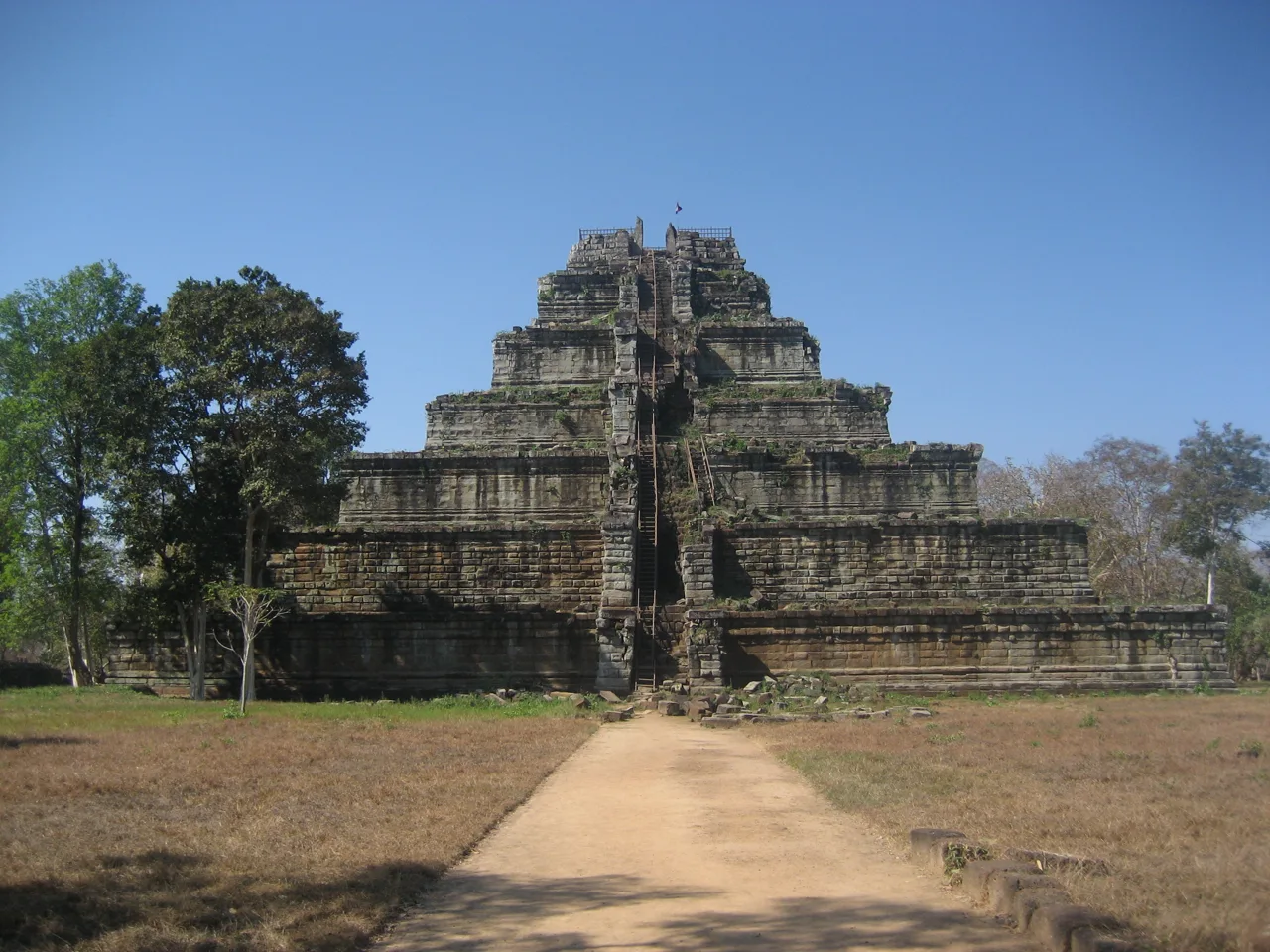
The main complex commonly associated with Prasat Thom and the stepped pyramid is the natural visual anchor for a first visit. Give yourself time to understand its approach and proportions before looking for a higher viewpoint. From permitted ground, notice how the mass of the monument is assembled, where the eye is drawn, and how the sequence of spaces controls your movement. A large structure can communicate authority through its arrangement as much as through decoration.
Climbing should be an optional part of the day, not its entire purpose. The opening hours of the park do not establish whether a particular staircase or upper platform is open, suitable for you, or temporarily restricted. Ask at the entrance and follow the conditions shown on site. If the ascent is unavailable, there is still a substantial architectural landscape to understand. Do not buy a day trip whose only attraction depends on an access promise the seller cannot confirm.
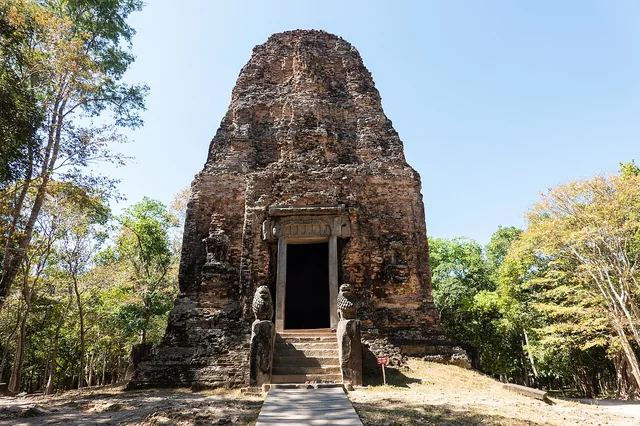
For your other stops, choose contrast. Ask your guide for a smaller shrine that makes the relationship between building and setting easier to see, and a place where an architectural or sculptural detail can be explained clearly from the authorised route. A circuit assembled around differences is easier to remember than a list ordered only by how many temples can fit before lunch. Ask for the local name of each stop and record it alongside any photographs you take.
Look at material without touching it. Weathering, broken surfaces and surviving carving can make a building legible, but a visitor's interpretation should remain modest. A smooth patch is not automatically evidence of a particular ritual; a gap is not automatically proof of looting; a displaced block is not an invitation to climb. If a detail matters to you, ask what the interpretation rests on. A helpful explanation distinguishes visible evidence, archaeological interpretation and a story repeated by visitors.
Photography can support this kind of attention. Take one wider frame that shows a structure's setting, then a closer view of a permitted detail, then a note identifying it. The sequence will tell you more later than twenty nearly identical pyramid images. Stay within the route while composing. A supposedly cleaner angle is not worth stepping into vegetation, blocking other visitors, or putting a fragile surface under pressure. The best photograph is not necessarily the one with every sign of present-day care removed.
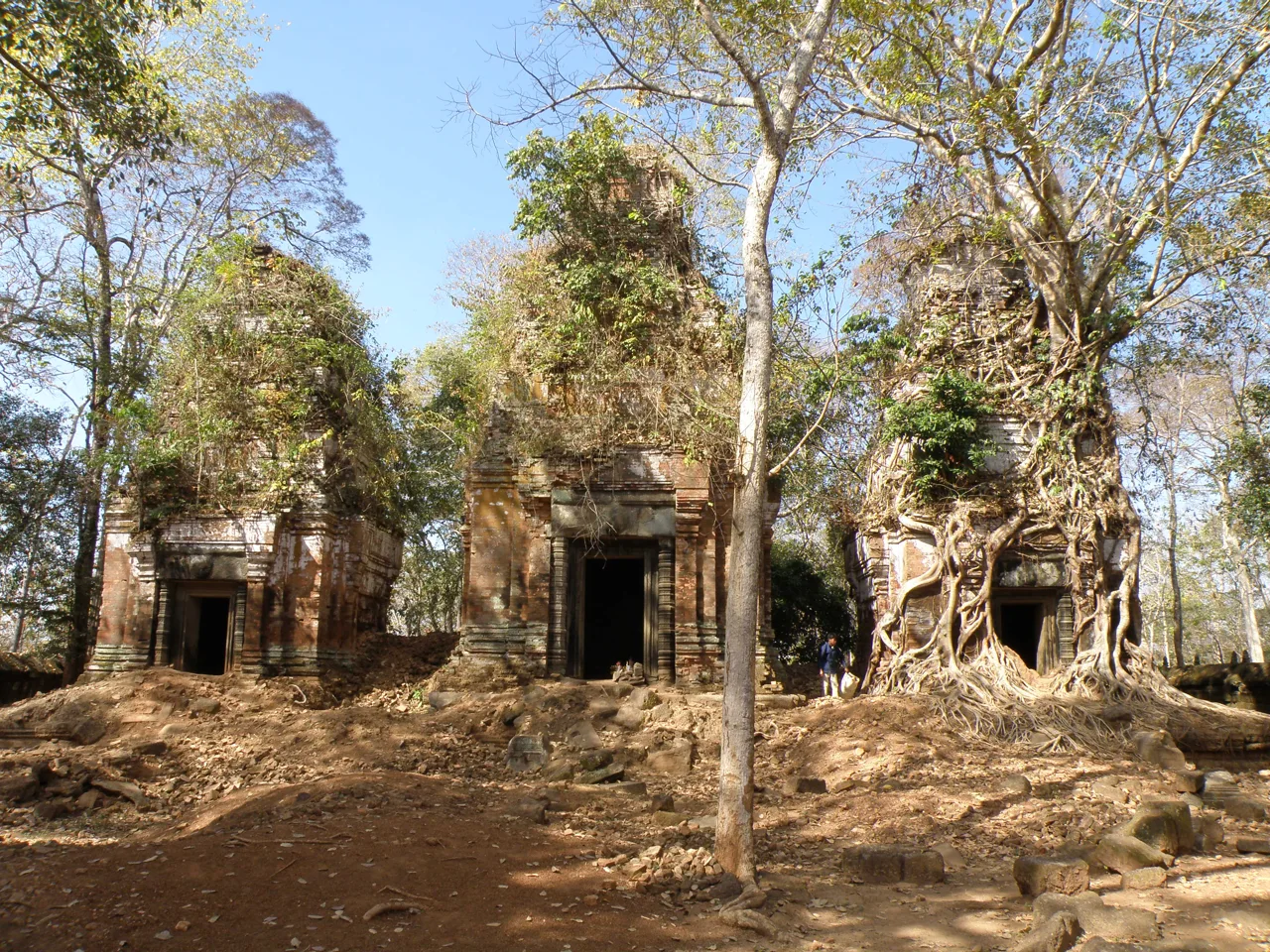
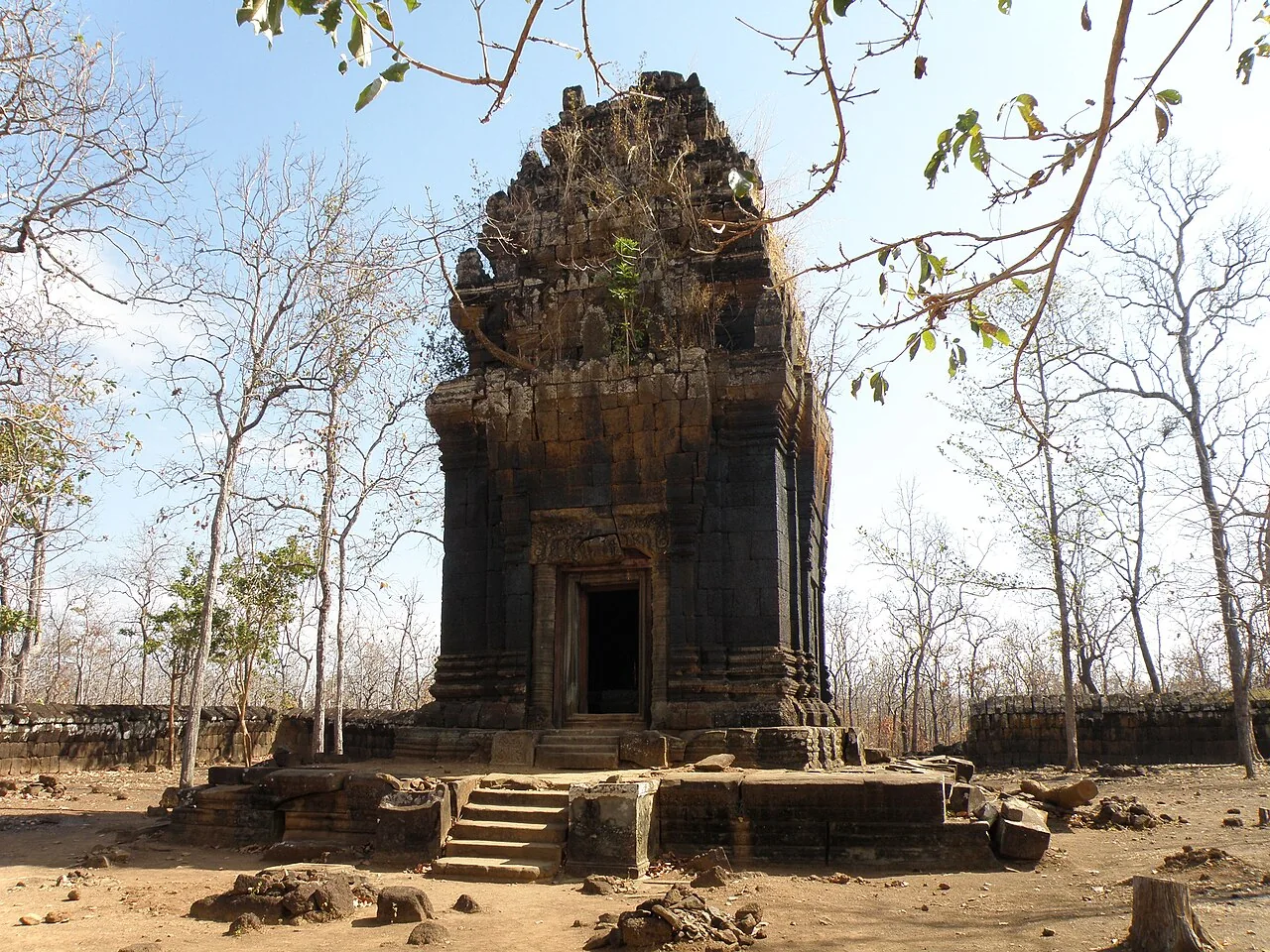
The missing statues have a story of their own
Koh Ker's sculpture belongs in the visit even when the objects you want to understand are elsewhere. UNESCO's evaluation highlights an expressive style associated with the site. That makes a useful starting point for looking at a museum object or a documented photograph: consider posture, implied movement and how a figure might have related to a larger setting. An isolated image can be beautiful while concealing the architectural or narrative group to which it belonged.
Repatriation adds another layer. The United States Department of Justice has documented returns to Cambodia that include sculptures associated with Koh Ker. Its account of the Duryodhana identifies Prasat Chen as the source named in the legal case and records the arrangement for the statue's return. That is a specific documented history, not a reason to attach the same looting story to every missing figure at every temple. Duryodhana return record.
A separate Justice Department announcement concerns the return of a collection from the Metropolitan Museum of Art, including objects from Koh Ker. Read such announcements carefully: “returned to Cambodia” does not mean “reinstalled at the original temple,” and a national collection of returned objects need not come from one archaeological site. If you want to connect your temple visit with museum displays, confirm the current institution, exhibition and opening arrangements rather than relying on an old handover photograph. Collection return announcement.
For travellers, this is an opportunity to ask a better museum question. Instead of simply looking for “the Koh Ker room,” choose an object that interests you and follow its documented name, origin and display information. Save an official museum image or collection link before the trip. At the temple, consider what is known about the original context. At the museum, consider what a label can explain that the building alone cannot. The two experiences can complement each other without pretending the separation has been undone.
There is also a straightforward buying decision. Avoid purchases described as genuine archaeological fragments or ancient temple pieces. A souvenir does not need a dubious origin to carry a memory of the day. Contemporary work with a named maker and a clear explanation of materials offers a more meaningful conversation. Ask who made it, where it was produced and how it should be cared for. You can value Cambodian craft without turning the loss of heritage into part of your shopping experience.
Water belongs in the story, even when the photograph leaves it out
The forested setting can make it tempting to imagine that the temples stand apart from ordinary necessities. Water interrupts that picture. A city needs more than symbolic space, and the surviving hydraulic features are part of the archaeological landscape, not incidental scenery around its monuments. When planning the visit, ask whether your guide can explain a water feature that is safely visible on the current circuit. The aim is to connect it to the settlement, not to add an unmarked walk through the site.
Water also offers a different way to notice time. Stone buildings make change appear slow; a filled or lowered water feature makes it immediate. The appearance you encounter belongs to a particular part of the year and a particular set of conditions. Do not assume that a dry-looking area proves a system never worked, or that standing water establishes its ancient function. A present-day photograph is evidence of what was visible then. Historical interpretation needs a wider record.
Keep engineering explanations and political explanations distinct. An argument about a structure's performance may be relevant to the fortunes of a city, but it does not automatically identify a single reason a ruler changed residence. A good guide should be able to tell you where an explanation is well established and where researchers are still interpreting incomplete evidence. There is no need to call every uncertainty an unsolved mystery. Often the more interesting story is how people have found ways to test it.
You can use the same approach with vegetation. Trees and roots are visually powerful, yet a beautiful interaction between stone and growth can also create conservation questions. Avoid treating every tree as either the enemy of a monument or nature's rightful owner of it. Management decisions can involve stability, shade, habitat and visitor access together. The visual drama is real; the practical choices behind its care are usually more complicated than a caption about a forest “taking revenge.”
Continue the water theme with Tonlé Sap’s seasonal water landscape. That guide helps distinguish a lake journey from another temple excursion.
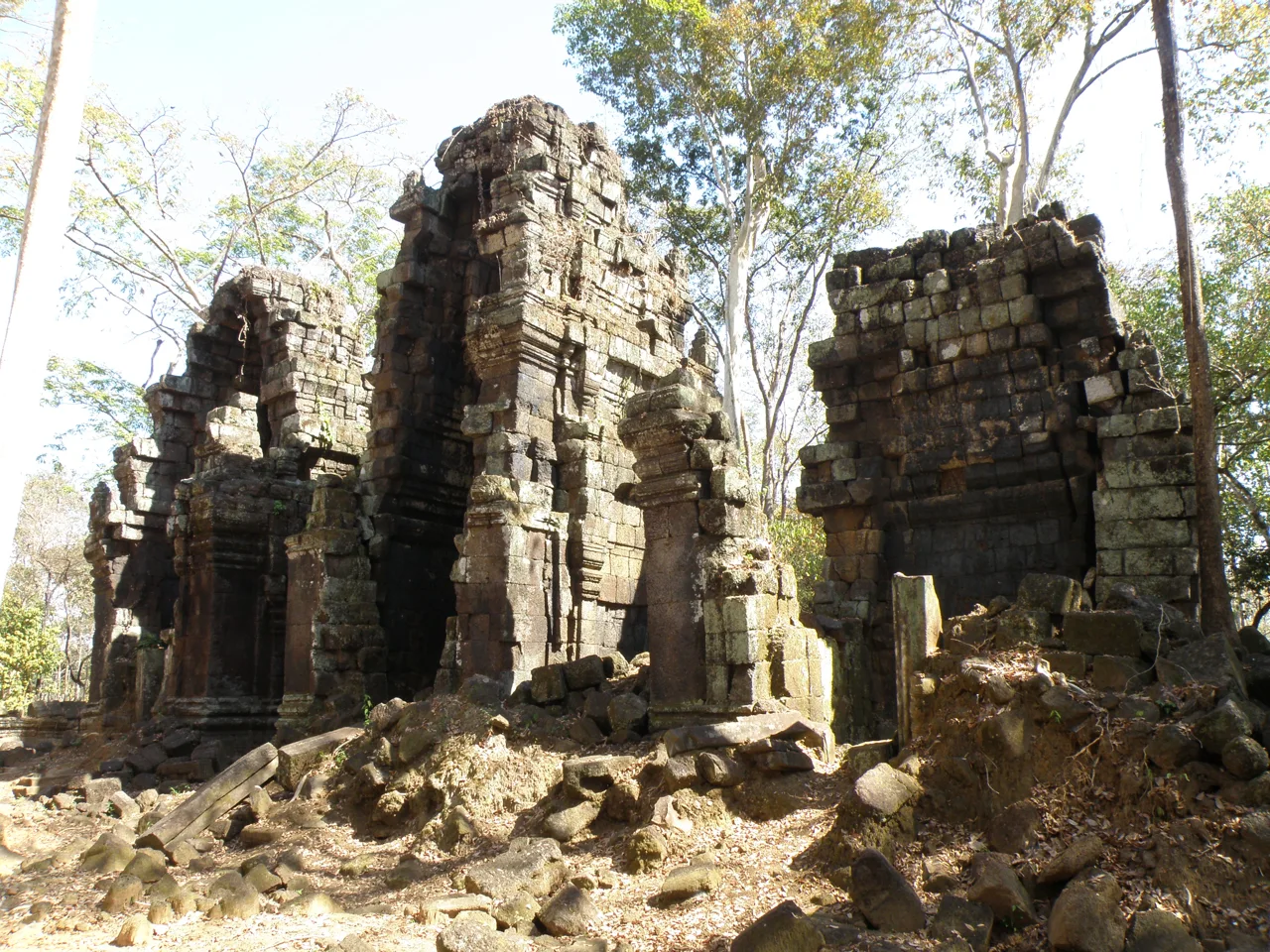
A living district, not a backdrop for ancient kings
Koh Ker sits within a present-day Cambodian landscape. The Ministry of Tourism locates the temple area in Srayong commune, Kulen district, in Preah Vihear province. That administrative setting helps separate it from the Temple of Preah Vihear and from the Angkor park around Siem Reap. Similar names in a tour description do not make these places interchangeable. When booking transport or discussing accommodation, use the destination name and confirm the actual stops. Ministry of Tourism destination entry.
The people you meet may be working, travelling, worshipping or accompanying their own families. Begin from that ordinary fact. Ask before photographing someone closely, and accept a refusal without negotiation. A purchase does not buy permission for a portrait. If you want a photograph of a craft process, a food stall or a shop display, explain what you are interested in rather than pointing a camera into the activity and hoping nobody objects.
Cambodia's krama is a good example of a familiar object worth understanding more carefully. UNESCO inscribed the cultural practices and expressions associated with this woven textile in 2024. Its significance includes everyday uses and the knowledge of making it. For a visitor, that supports curiosity about a textile and its maker, not a requirement to dress in a national costume. Krama cultural heritage record.
If you would like to buy one, ask about fibre, weaving and where it was made. Choose something you will actually use. An optional scarf can be useful in a travel bag, but loose styling should not replace clothing that already gives the coverage required at a sacred place. It is also not automatically certified sun protection. Practical clothing and interest in local craft can coexist without presenting a visitor's outfit as evidence of cultural expertise.
Keep useful language simple. A greeting, thanks, and a polite request for permission are better starting points than a memorised speech. Ask your guide or host to help with pronunciation and the appropriate degree of formality; do not be embarrassed to repeat a short phrase slowly. English transliterations are approximations, and a friendly effort works best when accompanied by attention to the reply. The aim is to make an interaction easier, not to perform fluency for a photograph.
Choose the day around heat, rain and how you travel
There is no single “best” day that suits every visitor. A photographer hoping for a particular sky, a family managing children's energy and someone interested in a slow architectural circuit may make different choices. The useful questions are how much exposed walking you expect, how long you will spend on the road, and whether the forecast leaves room for a comfortable return. A seasonal description can help with planning, but it should not be treated as a forecast for your date.
In hot conditions, the first improvement is usually a less crowded itinerary. Make an earlier start if transport and official access allow it, arrange a real break, and avoid making the longest climb the compulsory finale. Carry drinking water and plan where it can be replenished. Choose shade and rest before the day becomes a test of endurance. If travelling with people who have different walking capacities, agree that shortening the circuit is an ordinary option, not a disappointing failure.
For a rainy-day plan, focus on surfaces and timing. Footwear should help you feel stable on the permitted paths; a light rain layer and protection for your phone, ticket and other documents reduce small inconveniences. Ask what changes after heavy rain and which parts of the normal circuit staff currently recommend. Do not assume every route that appears on an old map remains appropriate. Leave enough time to return without pressure if a storm interrupts the visit.
April deserves a packing conversation if that is when you plan to travel. Ask your transport provider about shade, water and the timing of the walking portion rather than merely whether the vehicle has air-conditioning. A comfortable drive does not remove exposure after you step out. Equally, a cooler-looking morning does not justify leaving your protective clothing behind. Organise the day around the conditions you will actually experience, and consult the local forecast close to departure.
Public holidays and changes in local operations can matter as much as weather. Confirm transport, accommodation and ticket arrangements for your specific date, particularly if your schedule depends on a late arrival or a very early pickup. Avoid building a chain of commitments so tight that a delayed departure forces hurried walking or a night journey you did not intend. A little spare time is one of the most useful things you can include in this trip.
Plan the journey before you add another temple
Siem Reap is the practical planning base used in this guide. A Koh Ker visit involves a substantial road journey beyond the immediate Angkor circuit, so compare complete door-to-door plans rather than looking at the admission fee alone. Ask for an expected departure time, the travel allowance in each direction, the number of stops and when you should be back. Treat the provider's estimate as a planning allowance that can change with conditions.
A private vehicle can make sense when your group wants flexible stops or different walking lengths. A shared excursion may reduce the cost of transport per person, but its route and timing are set around a group. Neither is automatically better. Compare the aspects that affect your own day: pickup location, seat comfort, guide arrangements, time at Koh Ker, lunch plans and whether other admissions are included. A short product title is not enough information for that decision.
Adding Beng Mealea is a separate choice, not a free extra simply because you are already travelling. Ask how much time the combination removes from Koh Ker, whether the additional ticket is included, and how the provider handles a slower group. If your main interest is the history of Koh Ker, preserving time there may be more valuable than adding another temple name. If your priority is contrasting two sites, a combined route may suit you, provided its timing is realistic.
An overnight stay changes the calculation again. Before reserving somewhere near the site, confirm the actual location, meals, check-in arrangements, onward transport and whether the host can help with current local access information. Do not assume a small guesthouse offers the same services as a Siem Reap hotel, or that a booking-platform map pin gives an accurate walking route to the entrance. A clear conversation about practical needs prevents more disappointment than a long list of amenities.
The map in this guide is for orientation. It is not a clearance map, a parking instruction or proof that a track is open to visitors. Keep your driver's agreed meeting point separate from the archaeological site's general pin. Save those details before leaving reliable connectivity. If your party splits temporarily, agree where to reunite and how long to wait; do not make that plan depend entirely on everyone having mobile data.
Access information should be checked, not inferred
Koh Ker and the Temple of Preah Vihear are different sites. Both can appear in discussions of northern Cambodia, which makes careful naming important when reading advisories or planning a combined trip. Do not calculate whether an itinerary is outside a border warning by measuring its distance from another temple. A distance to a landmark is not the minimum distance to the international border, and a route may pass through areas that the destination pin does not describe.
Consult current advice from your own government and relevant Cambodian notices before committing to travel. Read the geographical wording, not just a country-level colour or number. Also check the route with a responsible local provider. Different governments may use different restricted distances and recommendations. This guide does not attempt to turn those differences into a universal permission to travel. UK Cambodia travel advice · US Cambodia travel advisory.
At the archaeological site, follow the designated visitor routes and current staff instructions. Do not cross barriers, enter vegetation for a better viewpoint or investigate an unfamiliar metal object. Clearance and conservation work are reasons to respect the route, not subjects for a visitor to assess visually. A path looking well worn does not establish that it is an authorised path, and a digital map may show tracks that were never intended as visitor access.
World Heritage recognition concerns the importance of a place. It does not certify every activity or every part of its surrounding landscape as safe. Likewise, the area covered by one reported clearance project cannot tell you what proportion of the entire property is contaminated. Those are different kinds of information. For the practical visit, the useful outcome is an authorised current route and clear instructions, not a percentage inferred from incompatible figures.
If an operator answers a specific access question with a broad assurance such as “all tourists go there,” ask again in concrete terms. Which road will you use? Which stops are open? Who confirms any restrictions? What happens if conditions change? A good plan includes the possibility of cancellation or substitution. Read those terms before paying, especially when the destination is the principal reason you chose the excursion.
The ticket is clear; the rest of the budget needs units
Angkor Enterprise lists a separate one-day Koh Ker pass at US$15, with park entry from 06:00 and closing at 18:30. These published details were checked on 15 September 2026. Recheck the official page for your travel date, eligibility and purchase conditions. The Koh Ker listing is separate from the Angkor park passes; do not assume an Angkor ticket includes it. Official ticket information.
After admission, transport is often the decision that most changes the shape of the day. A quoted vehicle price may cover the entire party, whereas an excursion price may be per traveller. A guide may be included, booked separately for the day, or available only at selected stops. Lunch can mean a meal is included, or merely that time is allowed to buy one. Write those units down before comparing two offers.
The calculator accompanying this chapter is a planning worksheet. Its transport, guiding, food and accommodation entries are your allowances, not live market quotes. Start with the official admission figure, enter the prices you have actually been offered, and use the same group size for every comparison. If one quote includes tickets, avoid counting them twice. If you add another temple, include its admission separately rather than hiding it in a general “extras” figure.
For example, two adults paying US$15 each have US$30 in Koh Ker admission before transport or meals. If their vehicle quote covers both travellers, add that quote once to the group total. Divide by two only when you want a per-person comparison. A family or larger group should use its actual ticket eligibility and the vehicle's permitted capacity, not scale an example beyond what the operator offers.
Keep accommodation separate from the day visit unless the comparison genuinely involves an extra night. A room price is usually per room per night, while meals are normally per person. Also leave a visible allowance for optional purchases and unplanned costs. This is not about making a holiday spreadsheet unnecessarily elaborate. It is about being able to explain why one plan costs more, and deciding whether the extra flexibility, time or comfort is worth it to you.
Choose an experience by its details
Read the itinerary before the reviews. Search for the time assigned to Koh Ker itself, whether guiding is continuous or limited to a stop, and whether the product combines several places. An excellent review from someone seeking a quick pyramid photograph may not tell you much about the kind of historical visit you want. Look for descriptions of the actual experience rather than using a star average as a substitute for understanding the product.
Useful questions include the guide's language, group size, vehicle arrangements, ticket inclusion and cancellation policy. Ask whether the visit can be adjusted if a climb is unavailable or someone in your party wants to avoid it. If an itinerary lists several temples, check whether that means meaningful time at each or a sequence of short photo stops. Your preferred pace should be part of the booking decision, not a request made after the vehicle departs.
Our Siem Reap Viator link is an affiliate link: Hidden Corners may earn a commission if you book through it. It leads to a marketplace, not an official ticket office or a tour personally tested by this publication. Use the criteria above to compare current products. A destination photograph next to that link illustrates Koh Ker; it does not show the vehicle, guide or exact service you are purchasing.
Booking.com can help compare places to stay in your chosen base. Our ordinary accommodation link has no affiliate tracking at this stage. Check location, room configuration, cancellation terms and recent property information. A low headline price is only useful if the property works with your pickup, meal needs and onward plans. Keep the accommodation decision connected to the journey you are actually making.
Pack for the route you chose
Begin with access and communication. Keep your ticket or purchase confirmation available offline, along with the contact details for transport and accommodation. Carry whatever identification the current ticket conditions require, but avoid bringing unnecessary original documents on a walking circuit. Store essentials so they remain accessible without unpacking the entire bag. A small power bank can be useful when a phone is serving as camera, map and contact book throughout a long day.
For clothing, choose garments that already provide appropriate coverage for sacred places and allow comfortable movement. A loose shirt and trousers or a suitably long skirt are practical starting points; consider how they behave while sitting, stepping and walking. Do not rely on a scarf that repeatedly slips out of place. Shoes should be comfortable before this trip begins and suited to the surfaces you expect, rather than chosen for how they look in an outfit photograph.
In sun and heat, bring water, a hat and protective clothing, and use sun protection according to its label. Make sure your bag leaves room for what you will need later, not just what fits during an early pickup. A personal medication or comfort item you routinely use may matter more than another camera accessory. If you have a condition that affects your tolerance for heat or exertion, plan the visit with advice appropriate to you rather than relying on a general travel article.
For rain, a compact rain layer and a dry pouch for documents and electronics can be more useful than carrying several spare outfits. Keep hands free where balance matters. Protect your equipment before the weather changes rather than rearranging it on a narrow route. A small cloth is handy for drying hands or wiping the outside of a bottle; it does not need to become another branded “essential” in a shopping list.
The illustrated packing panel is a visual reminder of categories, not a product endorsement. Likewise, a visitor-outfit illustration is not a documentary portrait of Cambodian people. You can use it to think about coverage and practicality while choosing your own clothes. Pack for the conditions and activities you have planned; leave out equipment for a speculative hike or side route that is not part of the authorised visit.
A day with room to understand what you see
Begin the planning the evening before. Confirm pickup, admission arrangements, the intended circuit and the return allowance. Decide which part of the visit matters most to you: architecture, sculpture, a guided explanation of the wider city, or a modest combination. Tell your companion and guide. A shared priority makes it easier to shorten the day intelligently if conditions change, because everyone knows which stops are central and which are optional.
At the site, start with orientation rather than rushing toward the pyramid. Ask which areas are open and which routes staff currently recommend. Establish the meeting point and allow time for tickets, toilets and water before the main walking portion. If a climb is available, decide then whether it suits the conditions and your party. Nobody needs to prove their interest in history by attempting an activity that does not suit them.
Give the main complex a coherent visit, then choose a contrasting stop. The second stop is where a guide can help you connect details across the landscape: a difference in scale, a material, a sacred image or a relationship to water. Ask one or two questions you genuinely want answered. You do not need to collect every date in the explanation. Understanding why a detail matters will usually stay with you longer than memorising a ruler's complete chronology.
Keep a real pause between the principal walking periods. Use it to drink, eat if appropriate, check how everyone feels and decide whether the planned remainder still makes sense. This is especially useful on a combined excursion, where it is easy to continue simply because another stop appears on the booking. A flexible plan allows the day to become shorter without making it feel unfinished.
On the return journey, save the names of the places you visited and any sources or museum suggestions your guide provided. If you intend to publish photographs, make sure you can identify the subject accurately. A caption written from memory weeks later is where neighbouring temples and different objects often become confused. A few careful notes preserve the detail that made your visit distinct, and give you a starting point for reading further.
If this day belongs to a longer Siem Reap stay, use the Angkor Wat visitor guide to plan a separate temple day without rushing both places.
Read the city from more than one direction
Before the trip, start with the World Heritage property page. It is concise enough to establish the principal names and the reasons for inscription without requiring a specialist library. Then look at the occupation-history paper if the difference between royal chronology and everyday settlement interests you. Read its abstract and conclusion first, and return to the methods only if you want to understand how the evidence was assembled.
For a printed or electronic introduction to the wider Khmer world, look for a reputable general history or archaeological guide whose scope is clear. The site's reading shelf retains publisher links so you can examine editions and descriptions yourself. A broad Angkor title can supply context, but it should not be mistaken for a dedicated Koh Ker site manual. Check the contents before buying if your interest is specifically in sculpture, water management or the tenth century.
A cultural introduction can help with everyday expectations, while a research collection can deepen a particular question after you return. These books serve different purposes. There is little value in buying the most technical volume if what you need is a readable introduction, or in expecting a short etiquette guide to settle an archaeological debate. Where we have relied on a publisher's description rather than read a book in full, the recommendation should be understood in that limited sense.
Finally, keep a free source alongside any purchase. Official museum collection records and documented repatriation announcements can connect a particular object to the temple story. They also make it easier to distinguish an old photograph, a current display and a handover event. The most useful reading list is not the longest one: it gives you a clear next step for the question that stayed with you.
Questions that change the plan
Is Koh Ker the same place as Angkor Wat?
No. It is a separate archaeological destination, and it requires a separate journey and ticket decision. Do not use an Angkor park itinerary or pass as proof of what is included at Koh Ker. If you have limited time, decide whether you want another day around Angkor or a longer excursion focused on this different former capital.
Is it worth going if the pyramid climb is closed?
That depends on your interests. A visit centred on architecture, sculpture and the wider city can remain worthwhile without an ascent. If the upper viewpoint is the main reason for your journey, confirm current access before paying and understand the provider's cancellation conditions. An image of an open staircase from a previous season is not a current access guarantee.
Can I combine it with other temples?
Possibly, but compare the full journey and the time left at each site. Ask about separate admissions, guiding, lunch and the return time. Combining places is useful when the contrast matters to you; it is less useful when it turns every stop into a hurried photograph. Keep one optional stop that can be dropped if the day becomes too long.
Should I hire a guide?
A guide can be particularly helpful if you want to connect scattered monuments, sculpture histories and the city landscape. Choose by language, knowledge and the proposed approach rather than by a promise to reveal forbidden or secret areas. Ask what they will help you notice and whether their service is included in your transport price. A clear answer is more valuable than an exaggerated itinerary.
What should I remember after the visit?
Remember that the pyramid is an entrance to the story, not its full extent. A short royal chapter can sit inside a much longer inhabited landscape. A returned statue can recover one relationship while leaving its original setting incomplete. A useful visit gives you enough context to recognise those differences, and enough time to look without turning the place into a checklist.
A closer look.
Dated photographs show different parts of the destination. They are documentary context, not promises about current access, water conditions or wildlife sightings.

Sok Heng Oeun
Sok Heng Oeun is the owner and editor of Hidden Corners. The Hidden Corners Editorial Team supports image preparation and editorial checks under his direction.
Sok Heng Oeun on Facebook ↗Research and AI-assisted editorial preparation. Publication authorized by Sok Heng Oeun; an individual owner reading review is not recorded. This guide does not claim a firsthand team visit.
Sources & image credits
Sources supporting this guide. Dated prices and access reports can change; confirm with the responsible authority before travelling.
- UNESCO property record ↗
- Cambodian cultural heritage account ↗
- Occupation-history research ↗
- Duryodhana return record ↗
- Collection return announcement ↗
- Ministry of Tourism destination entry ↗
- Krama cultural heritage record ↗
- UK Cambodia travel advice ↗
- US Cambodia travel advisory ↗
- Official ticket information ↗
Photograph credits
- Koh Ker Pyramid · Arian Zwegers · 2008-01-22 · CC BY 2.0. Resized and converted to WebP; display may crop to fit. These adaptations remain available under their respective licences.
- Koh Ker Pram · BluesyPete · 2011-01-22 · CC BY-SA 3.0. Resized and converted to WebP; display may crop to fit. These adaptations remain available under their respective licences.
- Koh Ker Pichean · BluesyPete · 2011-01-22 · CC BY-SA 3.0. Resized and converted to WebP; display may crop to fit. These adaptations remain available under their respective licences.
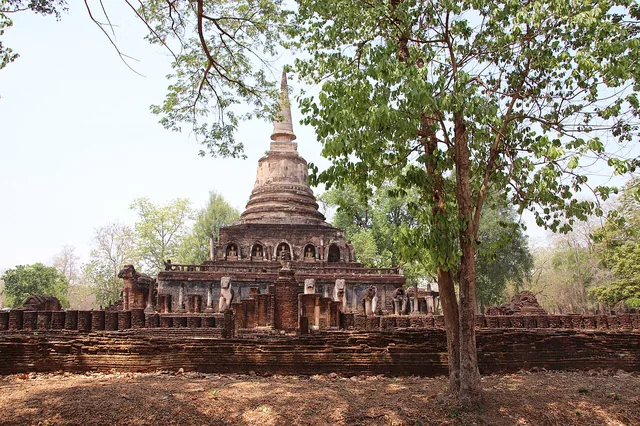
- Koh Ker Neang · BluesyPete · 2011-01-22 · CC BY-SA 3.0. Uses a publisher-provided resized version, converted to WebP; display may crop to fit. These adaptations remain available under their respective licences.
Packing and outfit graphics: AI-generated editorial illustrations. Portrait: supplied by Sok Heng Oeun.
.jpg)


