
One park, many undergrounds
Ask what there is to do in Phong Nha and the answer is usually "caves", as though that settled the matter. It does not. Phong Nha–Ke Bang National Park in central Vietnam contains hundreds of known caves, and the handful open to visitors are so different from one another that choosing among them is the real planning decision. One is entered by boat on a river and seen mostly from the water. One is a dry cathedral walked on a long wooden boardwalk after a steep climb. One involves a zip line, a swim in the dark and a bath in soft clay. One requires an overnight camp beside a river in the jungle. And one, Hang Son Doong, which many people come to the region hoping to see, is a multi-day expedition for small groups, with fitness prerequisites and a price that places it in a different category from everything else here.
This guide is built around that choice. It explains why this landscape is so full of caves and how UNESCO came to recognise it in stages. It tells the short, recent history of how the most famous caves were found, which matters because it shapes who runs them and how. It then sets out the main visitor caves in two broad groups: those you can visit on an ordinary day ticket, and those you can only reach with a licensed operator. For each, it describes what you actually do, who it suits and what limits it has. It separates caves open to visitors from the many caves that are research sites or closed to tourism. And it ends with practical guidance on the seasons, which here are unusually decisive, on getting to the park from Dong Hoi, and on putting together two or three days that match your fitness, budget and comfort underground.
The guide is written from published research and official information rather than from a visit by the author. It does not give current ticket or tour prices, which change frequently and could not be verified at the time of writing, and it points to official and operator sources for confirmation.
Why this limestone is so hollow
Phong Nha–Ke Bang lies in the Annamite mountains near Vietnam's border with Laos. The park's core is one of the largest continuous areas of limestone karst in Asia, and its rocks are old. Geologists describe a long sequence of limestones and other sediments laid down over hundreds of millions of years, beginning in the Palaeozoic era. The UNESCO evaluation stressed this length of geological record as one of the reasons for the park's importance: the karst preserves evidence of the Earth's history across a very long span, not only spectacular caves.
Over time these rocks were uplifted, folded and fractured by tectonic forces associated with the collision zones of Southeast Asia, creating fault lines and joints. Water exploits such weaknesses. Limestone, made mainly of calcium carbonate, dissolves slowly in water made weakly acidic by carbon dioxide from the air and soil. Central Vietnam receives very heavy seasonal rainfall, concentrated in a few months, and the rivers draining the mountains have, over hundreds of thousands to millions of years, dissolved and eroded vast underground passages along these lines of weakness.
Several features of this landscape follow from that process. Rivers disappear into the hills and flow underground for kilometres before reappearing. Where cave roofs collapse, enclosed hollows open to the sky, called dolines, form inside the hills, and forest grows in them; Son Doong's two great dolines are the best-known examples, letting daylight and trees into the cave. Ridges and towers of bare rock rise between valleys. And because water levels underground respond quickly to rainfall, many caves alternate between dry and flooded with the seasons.
The caves are not finished. Rivers still flow through many, and in the wet season they rise dramatically, sometimes filling passages that are dry the rest of the year. Seasonal flooding is both the engine of cave formation and the reason access to many caves is limited to certain months.
UNESCO inscribed Phong Nha–Ke Bang as a World Heritage Site in 2003 for its geology and geomorphology. In 2015 the inscription was extended, adding criteria for ecosystems and biodiversity in recognition of the forests above the karst. In 2025 the World Heritage Committee approved an extension across the border into Laos, and the property is now listed as Phong Nha-Ke Bang National Park and Hin Nam No National Park (UNESCO World Heritage Centre). These stages show recognition moving from the rock beneath to the living forest above and across a political border that the karst does not observe.
The transboundary listing is a heritage designation, not a travel arrangement. The inscribed boundary does not grant access to any cave, does not create a walking or caving route between the two parks, and says nothing about border crossings. Hin Nam No is reached and managed from the Lao side under Lao rules, and a visit to Phong Nha does not include it.
Geology at three scales: mountain, passage, drip
A cave visit here can feel like a sequence of impressive rooms. It becomes more legible if you read it at three scales, each showing a different part of the same process.
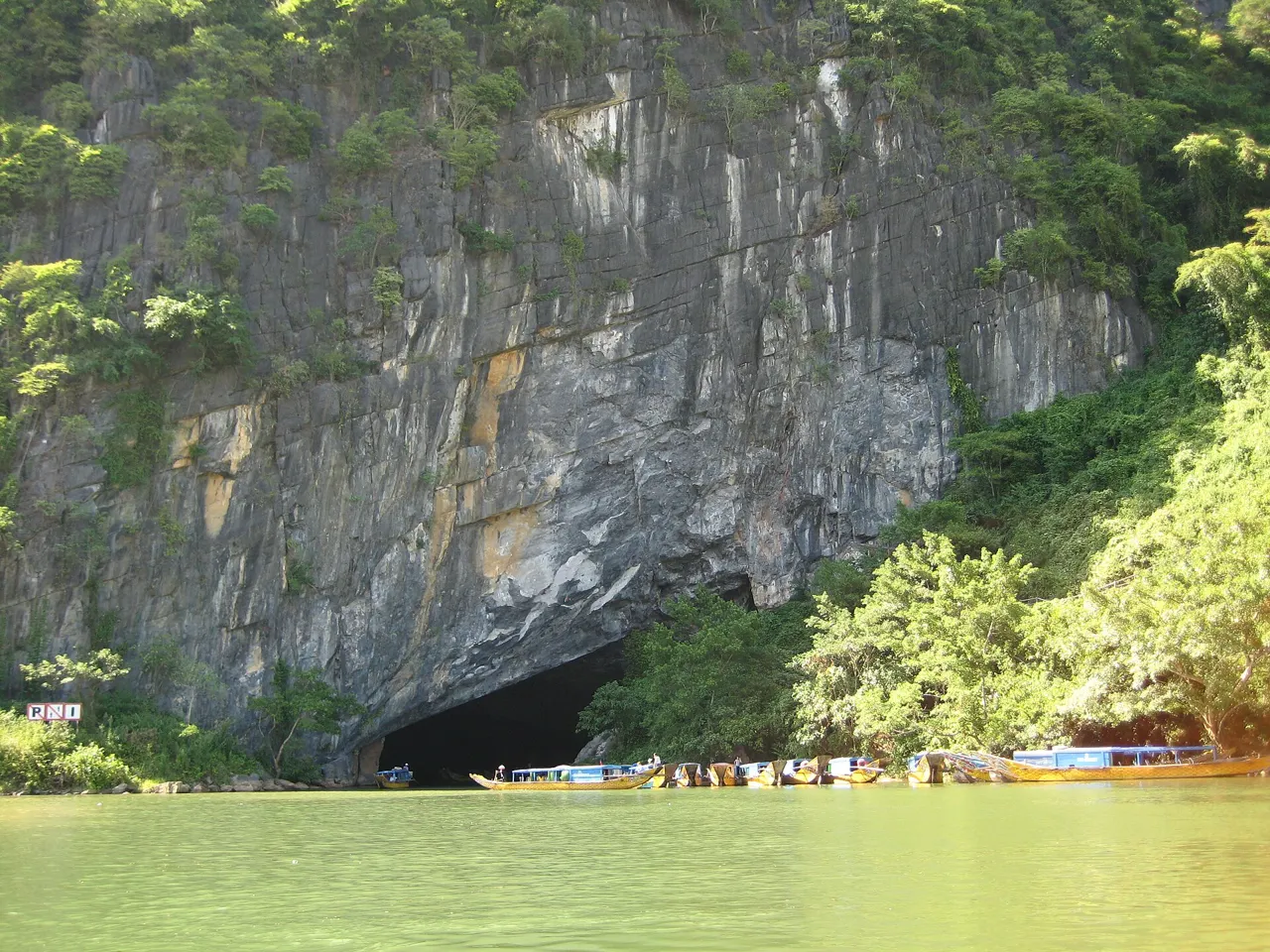
The mountain. From the road between Phong Nha town and the inland caves, the landscape itself is the first clue. Steep, forested limestone hills rise abruptly from flat valleys; rivers run along the valley floors and, in places, vanish into the hillside. This is karst at landscape scale: rock that water removes by dissolving rather than only by wearing away. Where a river meets limestone it can sink underground, and the mountain becomes, in effect, a drainage system with a roof. The national tourism authority's count of more than three hundred caves in the area is a reminder of how far that process has gone (Vietnam National Authority of Tourism, Phong Nha).
The passage. Inside a river cave such as Phong Nha Cave, you are in a tunnel made by moving water. Look at the shape of the passage: rounded walls and ceilings where water once filled the conduit, wider and flatter sections where a river has cut down into the floor, banks of sand and gravel where the current slows. On some cave walls, water leaves shallow, spoon-shaped hollows called scallops. In cave science, scallops are read as a record of flow: they are asymmetric, steeper on the upstream side, and smaller scallops generally indicate faster water. Whether you can see them clearly from a boat or boardwalk will depend on the cave and the lighting, but the habit of asking which way the water went, and how fast, turns a lit tunnel into a readable channel.
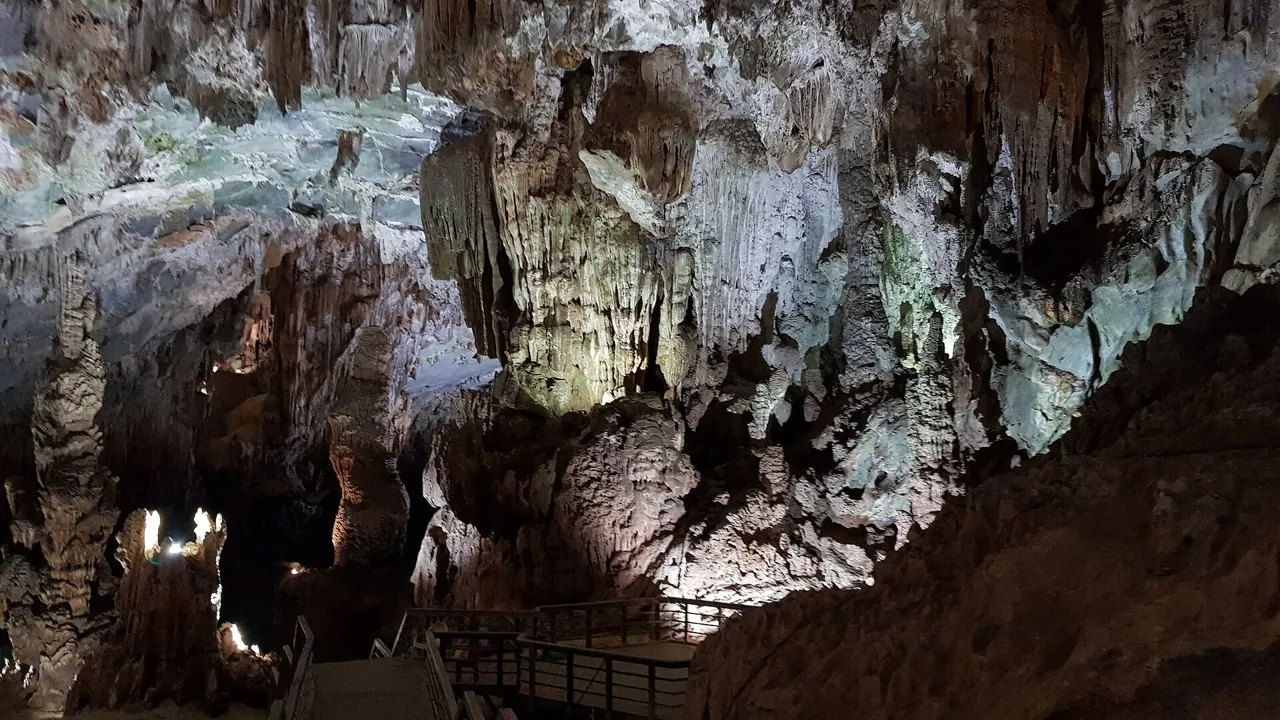
The drip. Formations, or speleothems, work in reverse. Water that has seeped through the limestone above carries dissolved calcium carbonate and extra carbon dioxide picked up in the soil. When it emerges into cave air, some of that carbon dioxide escapes, and the water can no longer hold all of its dissolved load, so a film of calcite is left behind. Drop by drop, that builds stalactites from the ceiling, stalagmites from the floor, curtains along sloping roofs and flowstone across walls. The dry, high galleries of Paradise Cave and Tien Son are where this scale dominates. A formation that is wet and glistening is still part of an active drip; one that is dull and dry may have stopped.
The three scales are one story. Water dissolves the mountain, opens the passage and, where it slows and degasses, decorates it. A river cave and a dry show cave are not different kinds of thing; they are different stages and positions in the same system. Seeing both, even on a short visit, is a better geological education than seeing only the biggest.
The scales also explain why the caves are fragile at the smallest one. A passage formed over very long periods can withstand a boat. A formation built by thin films of calcite cannot withstand hands, and a single broken straw stalactite is a loss no repair can undo.
Found, and found again
Local people have known caves here for a very long time. Phong Nha Cave, the park's namesake, contains traces associated with the Cham, the civilisation that ruled this coast before Vietnamese expansion; inscriptions and small altars inside the cave have been studied by archaeologists. During the war in Vietnam, caves in the area sheltered people, supplies and field hospitals, because the region lay along routes connected with the Ho Chi Minh Trail and was heavily bombed. Many smaller caves were known to hunters, forest workers and collectors of forest products, who used them as shelters.
What changed from the 1990s was systematic exploration. Teams from the British Cave Research Association, led by experienced cavers including Howard and Deb Limbert, worked with Vietnamese scientists from Hanoi and Quang Binh to survey caves in the region, starting in the early 1990s. Over two decades they mapped many kilometres of passage. Several caves now open to visitors were found or fully explored in this period, often because local people led researchers to entrances they knew.
Hang Son Doong is the best-known case. A local man, Hồ Khanh, is credited with finding its entrance around 1990 while sheltering from a storm in the forest. He heard the sound of a river and felt wind from the opening but did not go in, and could not find the entrance again for years. In 2009 he led a joint British–Vietnamese expedition to it, and the team surveyed what proved to be one of the largest known cave passages in the world, with sections of extraordinary height and width, two collapsed dolines with forest, and a great calcite wall near the far end. Son Doong opened to limited commercial tourism in 2013.
Paradise Cave followed a similar path: reported by a local man in the mid-2000s, surveyed by the British–Vietnamese teams, and developed as a show cave with a boardwalk. The lesson for visitors is that exploration here is recent and continuing. Caves are still being found and surveyed each year. Most known caves are not open to tourists. Many are research sites with fragile formations, unstable ground, deep water or flood risk, and some lie in strictly protected zones. A cave being known is not the same as it being open.
Day-ticket caves: river, stairs and boardwalk
These caves can be visited on an ordinary ticket, independently or on a day tour. They are managed for visitors, lit, and fitted with paths or boats.
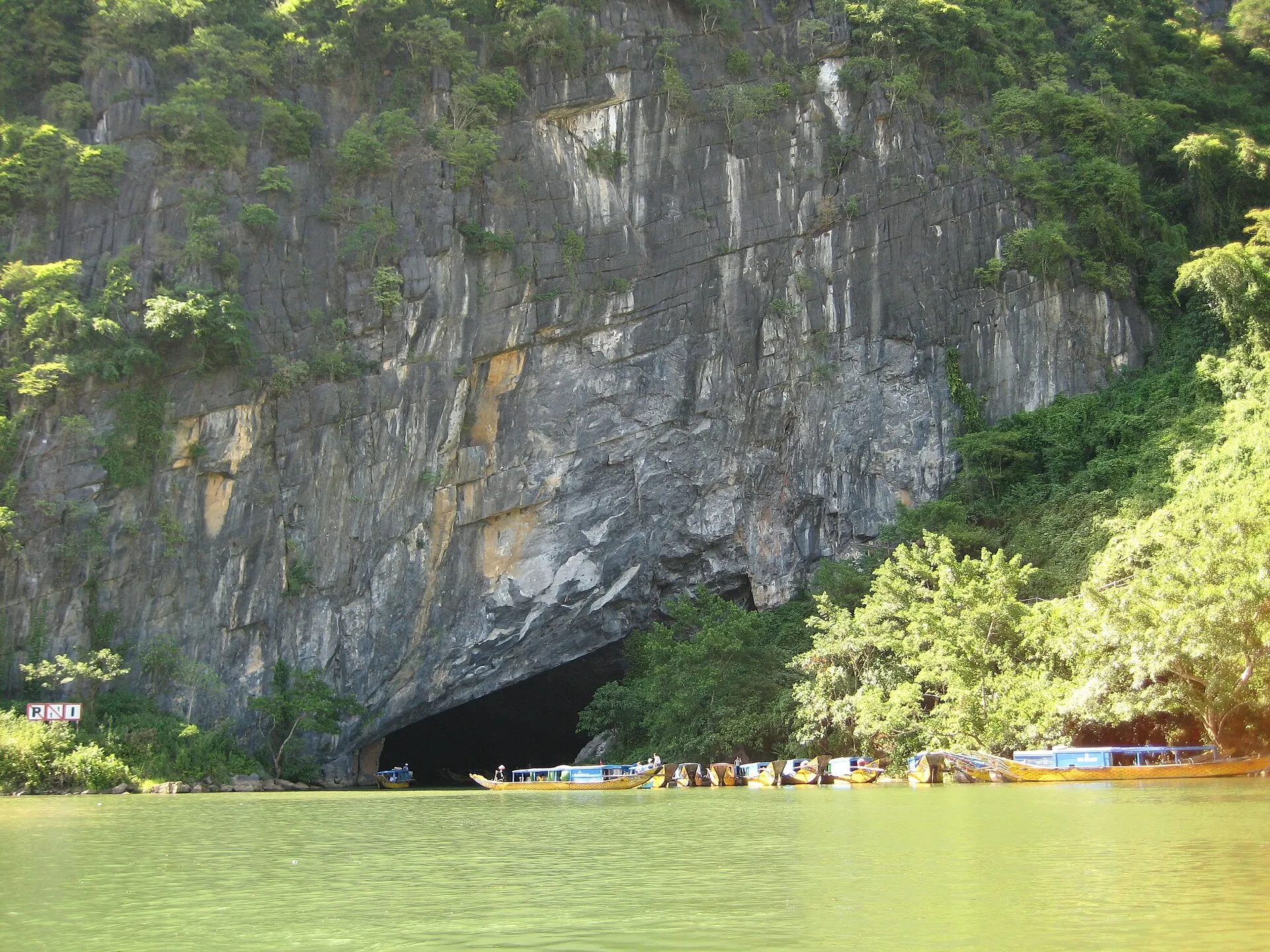
Phong Nha Cave: the river trip. The longest-established tourist cave in the park. Visitors buy a ticket and a boat at the riverside landing near Phong Nha town and travel up the Son River for a stretch before reaching the cave mouth, where the river flows out of the mountain. The boat enters the cave and moves inside on the underground river, past formations lit by coloured or white lights, before stopping at a landing where you walk a short path inside the cave. The boat then returns downstream. The experience is mostly seated, with steps at landings, and suits people who want to see a large river cave without much physical effort. It is also the cave most directly connected with older history: look for the Cham-era traces mentioned on interpretation. The boat trip depends on river conditions and may be suspended in floods.
Tien Son Cave: stairs to a dry gallery. Near Phong Nha Cave and often combined with it on one ticket or visit. Tien Son is a dry cave higher on the hillside, reached by a long flight of stairs. Inside, walkways lead past formations. It suits people comfortable with a sustained climb and adds a contrast: a dry gallery above the wet river cave below.
Paradise Cave: the boardwalk cathedral. Explored in the mid-2000s and opened to visitors around 2010–2011, Paradise Cave (Động Thiên Đường) is commonly reported as surveyed at over thirty kilometres, but visitors on a standard ticket walk only the first section, commonly given as around one kilometre, on a wooden boardwalk with stairs. The cave is dry, very high, and known for dense and varied formations: stalactites, stalagmites, columns, curtains and flowstone. Reaching it involves a walk or electric shuttle from the car park and then a long climb of stairs up the hillside to the entrance, followed by a descent of stairs inside. Paradise Cave suits people who want a spectacular cave without getting wet or muddy and who can manage many steps. Operators also offer longer guided treks deeper into the cave, which are a different, more demanding experience and need booking.
All three caves can be busy at peak times, particularly on Vietnamese holidays and weekends. Arriving early helps.
Operator caves: water, mud, camps and expeditions
These caves require booking with a licensed operator or a managed activity provider. They involve physical effort, water and risk, and they come with safety equipment and guides.
Dark Cave (Hang Tối): the active one. On the Chày River near the road to Paradise Cave, Dark Cave is run as an activity: a zip line across the river to the cave area, a swim into the cave mouth, wading and walking in darkness with helmet lights, a mud bath in a section of soft clay, and kayaking back on the river. Confirm which activities are operating and what equipment the operator supplies. Check the fit of the required life jacket and helmet before taking part; do not assume that a past description establishes today’s provision. It suits people comfortable in water who want physical activity and do not mind getting dirty. It is not suitable for those who cannot swim confidently or who are uneasy in darkness or mud.
Guided caving trips. Licensed operators run day and multi-day trips into other caves in the park and in the nearby Tu Lan area. These often involve jungle trekking, river crossings, swimming through caves and camping. Each trip has its own fitness requirements and age limits. They are an option between the day-ticket caves and the big expeditions.
Hang En: the overnight camp. One of the largest cave passages in the region, Hang En is usually visited on an overnight trek: jungle walking, crossings of rivers and streams, and a night camping inside the cave near an underground river and a lake. It is offered by a licensed operator and is also the first stage of the route to Son Doong.
Hang Son Doong: the expedition. Commercial expeditions to Son Doong are run by Oxalis Adventure; this guide has not verified the licensing arrangement behind that or any annual visitor cap. On its own expedition page, checked on 17 October 2026, Oxalis describes a six-day, five-night trip for groups of ten, operating from January to the end of August, with participants aged 18 to 70 (Oxalis Adventure, Son Doong Cave Expedition). The page sets fitness prerequisites, including recent overnight trekking and camping experience, and lists what is included, among them transfers from Dong Hoi, meals, camping and safety equipment, hotel nights before and after, insurance and park fees. It also states that the itinerary may change because of weather. Expeditions involve jungle trekking, river crossings, rope-assisted sections, scrambling over large boulders and camping inside the cave. They are physically demanding and expensive. The operator says places sell fast, but this guide does not give a booking horizon, because none is guaranteed.
Son Doong is extraordinary for those who can do it, but it is not the only worthwhile cave experience here, and for most visitors other caves are more suitable. Treat it as a separate trip, not something to fit into a short stay.
Choosing the right underground journey
The decision usually turns on six questions. Answer them honestly before booking.
Do you want to stay dry? Choose Paradise Cave, Tien Son Cave or the Phong Nha boat trip. None involves swimming.
How are your knees and lungs on stairs? Paradise Cave and Tien Son involve long flights of steps. The Phong Nha boat trip has the least climbing.
Are you comfortable in water and darkness? Dark Cave and guided caving trips involve swimming, wading and complete darkness outside your helmet light.
Do you have several days and high fitness? Consider Hang En or a multi-day trip. Son Doong requires both and a large budget.
What is your budget? Day-ticket caves are modest; activity caves cost more; multi-day trips are expensive; Son Doong is in a different category.
What season is it? In the flood season, boat trips and many operator caves may be suspended. In the dry season, everything is more likely to run.
A common and balanced plan is Phong Nha Cave and Paradise Cave on separate half-days or one full day, adding Dark Cave if you want activity, and an overnight trip if you have time and fitness. People who try to do every cave in a single day tend to spend most of it in vehicles and on stairs.
For travellers with limited mobility, Phong Nha Cave by boat is the most accessible option, though landings involve steps. Ask the management office about current arrangements before travelling.
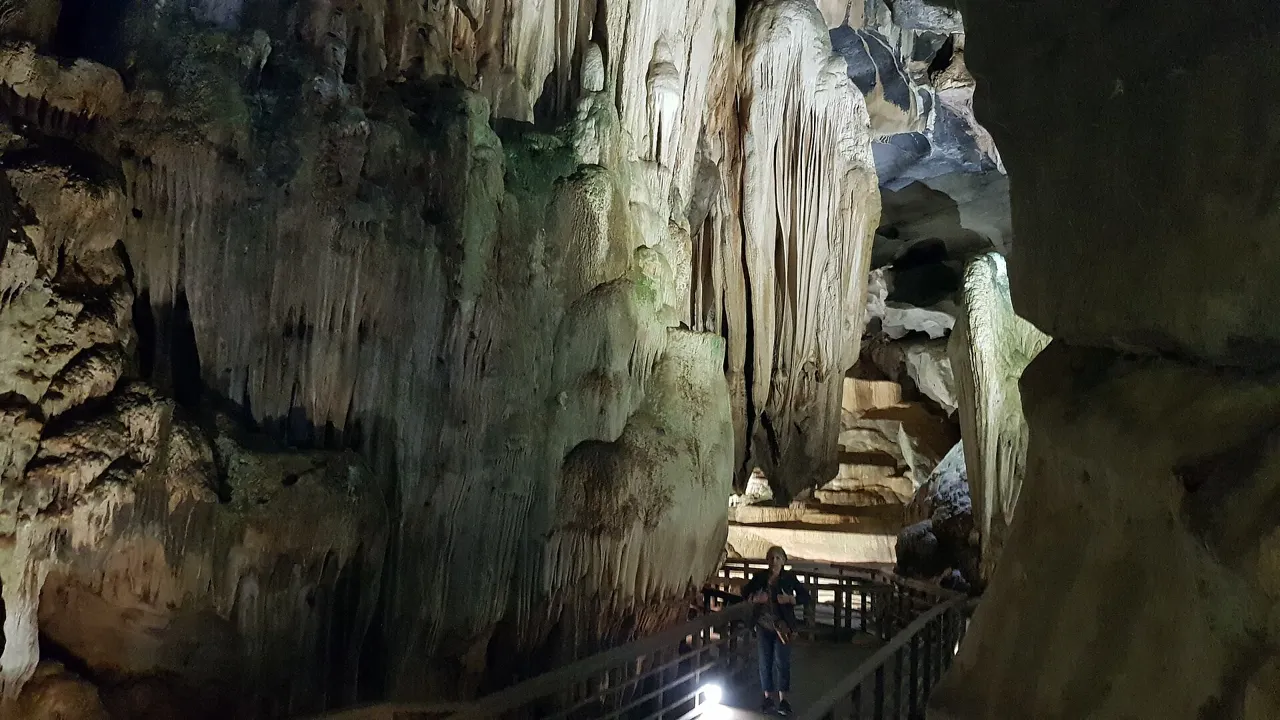
When a cave is cancelled: planning for the river
In Phong Nha, the river decides more than the visitor does. Rain in the mountains can raise water levels quickly, and the same flood that shaped the caves can close them for a day or a season. A plan that depends on one particular cave on one particular day is fragile. A plan built around substitution is not.
Know which visits are most exposed. The Phong Nha Cave boat trip depends on the river; when it is high or fast, boats may be suspended. Activity caves that involve swimming or kayaking depend on water conditions too. Dry show caves such as Paradise Cave are less exposed to river levels, though road access and severe weather can still affect them. Multi-day trips are the most exposed of all, because they combine river crossings, forest trails and remote camps, and an operator's decision to change or cancel is a safety call, not a commercial one.
Put the hardest-to-replace visit early. If an overnight trip or expedition is the reason for coming, schedule it at the start of your stay rather than the end. If it is postponed, you have days left to absorb the change. If it runs, the rest of the stay becomes a relaxed sequence of day caves rather than a countdown.
Build a fallback ladder. For each day, decide in advance what you will do if the first choice is off. A sensible ladder runs from the most exposed to the least: boat cave, then dry show cave, then a forest walk or a cycle in the valleys near town, then a rest day. The aim is not to see something at all costs; it is to avoid spending a rainy morning negotiating a trip that should not run.
Read the cancellation terms before you pay. For booked trips, the difference between an operator cancelling and a customer cancelling matters. Oxalis's Son Doong page, for example, sets out charges that rise as the departure date approaches when the customer cancels, and separately reserves the right to change the itinerary for weather. Ask any operator what happens if they cancel or shorten a trip: is the payment refunded, credited or rescheduled, and is a partial trip treated differently from a cancelled one? Do not rely on a verbal assurance for a large payment.
Do not lock in the next day. Avoid non-refundable onward transport or flights on the day after a multi-day trip is due to end. Weather that delays a return from the forest is not unusual, and an expedition that finishes late into Dong Hoi leaves little margin.
Treat the flood season as a different trip. From roughly September to December, the national tourism authority describes the months as flood-prone and best avoided for caving. Visiting then is still possible for some caves on some days, but plan it as a stay in which the itinerary is decided each morning, not in advance.
A cancellation changes the day, not the value of the visit. The same karst that closed a cave this morning is the reason the caves exist, and watching a brown river rise against limestone cliffs is part of understanding Phong Nha.
The forest above and the town below
The park's forests, recognised by UNESCO in 2015, are among the most important in Vietnam. They include large areas of tropical forest on limestone, which is a distinctive habitat: thin soils, steep slopes, and plants adapted to rock and seasonal drought. The forests are home to primates including several species of langur and gibbon, many of them threatened, as well as a large number of bird species, reptiles, amphibians and invertebrates, some found only in this karst region. Surveys continue to describe species new to science.
Conservation pressures include hunting, illegal logging, collection of forest products and infrastructure development, including roads through the park. Tourism itself brings pressures: more roads, more visitors, more construction. It also brings revenue and employment that can support conservation if managed carefully. Visitors see the forest mostly from roads, trails and boat trips. Some operators offer guided forest walks. Staying on marked routes, using licensed guides and not buying wildlife products helps protect the forest.
Phong Nha town, around the commune of Son Trach on the Son River, has grown from a farming village into a tourism centre in a short time. Many residents now work in tourism as boat operators, guides, porters, cooks and homestay hosts, while others continue to farm rice and other crops. Local people have played central roles in the story of the caves: as discoverers who led researchers to entrances, as porters and guides on expeditions, and as hosts.
The boat cooperative at the Phong Nha Cave landing is one example of how tourism income reaches families directly. Homestays in villages around the town offer another. When choosing operators and accommodation, consider whether they employ and train local staff. Dress modestly in villages, ask before photographing people, and remember that the fields you cycle past are someone's livelihood.
What to notice underground
Active formations. Look for stalactites and stalagmites that are wet and shining; those are still growing as water deposits calcite. Dry, dull ones are inactive. Neither should be touched; skin oils and abrasion damage them, and growth is extremely slow.
Flood marks and debris. On walls and ledges, look for lines of mud or trapped debris such as twigs and leaves, sometimes well above the visitor path. They show how high water rises in the flood season, and explain why caves close.
Sediment banks. In river caves, sand and gravel banks show where the current slows and drops material.
Scale and light. In large chambers, lighting shows the scale; watch how the boardwalk or boat seems small against the walls.
Older human traces. In Phong Nha Cave, look for interpretation on Cham-era traces. In the wider area, war-era sites are commemorated; treat them with respect.
Air movement. Near entrances you may feel air moving in or out of the cave, a sign of the cave's connection to the outside and the temperature difference between inside and out.
Rules. Stay on paths and boardwalks, follow guides, and do not take anything, including stones or broken formation fragments.
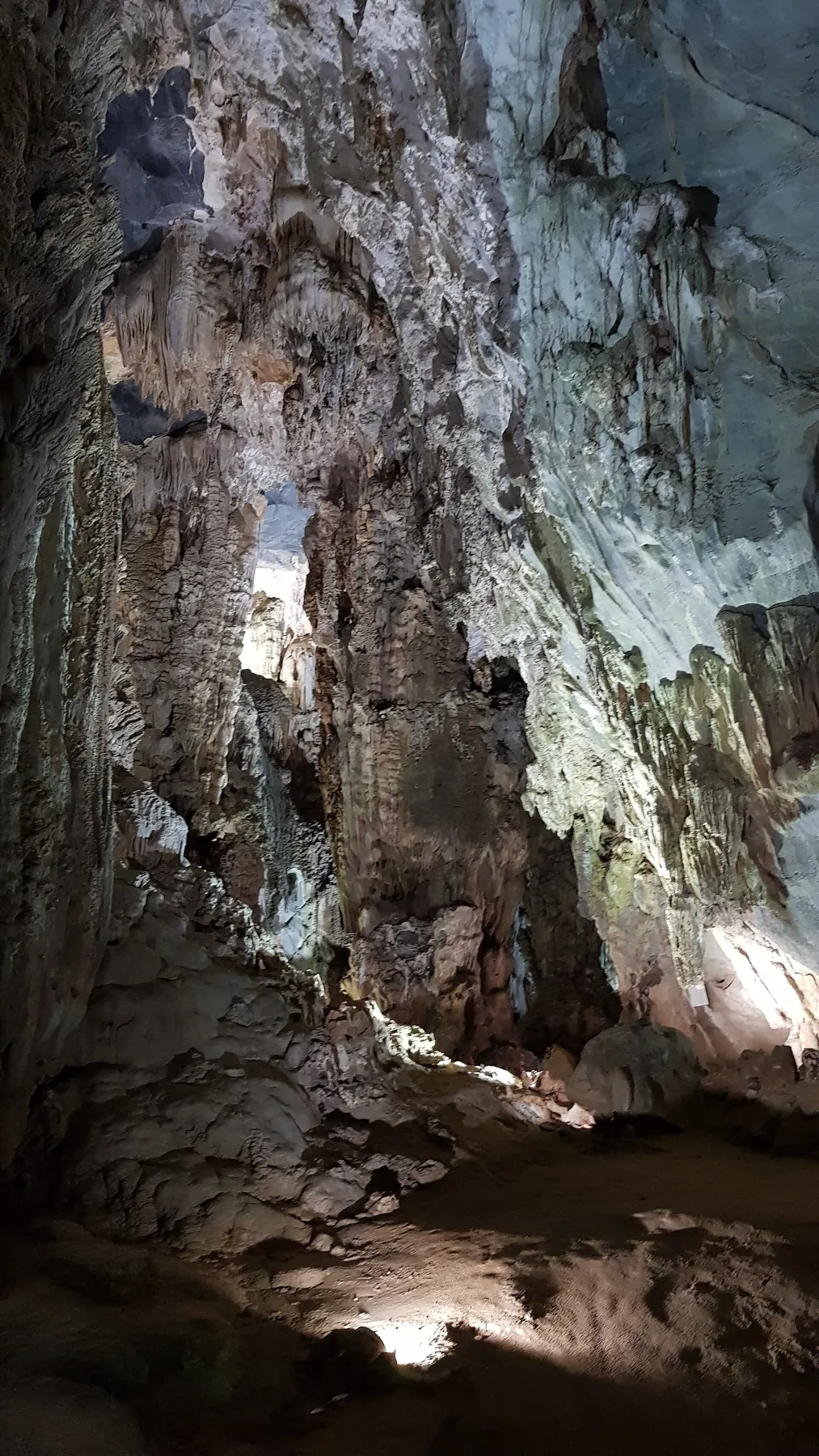
When to go: the flood calendar decides
Central Vietnam has a climate pattern different from the north and south. The main rainy season comes roughly from September to December, bringing heavy rain, floods and typhoons. Rivers rise rapidly, and the Son River at Phong Nha can flood the town. During this period, boat trips and many operator caves may be suspended, roads can be affected, and some days the whole park may be closed to certain activities. Oxalis lists its Son Doong season as January to the end of August, and the national tourism authority recommends roughly February to August for caving, describing September to December as flood-prone months best avoided.
The drier season runs roughly from January to August. January to March can be cool and drizzly, with mist on the karst; it is a comfortable time for walking, though some caves may still have high water early in the year. From April or May the weather becomes hot and humid, with high midday temperatures outside, while caves remain cooler inside. The summer months are a popular time for adventure caves because water is warmer for swimming.
Plan expedition trips for the operating season and book ahead, without assuming a fixed booking horizon. For day-ticket caves, the dry season is reliable; in the rainy season, keep plans flexible, check daily, and be prepared to swap a boat trip for a dry cave or a rest day.
Location and access from Dong Hoi
Phong Nha–Ke Bang lies in central Vietnam, inland from the coastal city of Dong Hoi; the national tourism authority puts it about 45 kilometres from Dong Hoi's airport. Under National Assembly Resolution 202/2025/QH15 of 12 June 2025, Quảng Bình province, where the park lies, was combined with Quảng Trị into a new province that keeps the name Quảng Trị (Đại biểu Nhân dân, text of Resolution 202/2025/QH15). Older maps, signs and books still say Quảng Bình, and the name remains a useful regional label. The change does not alter road distances or transfer times.
Dong Hoi. The city has a domestic airport with flights to Hanoi and Ho Chi Minh City and a station on the North–South railway. Long-distance buses also stop in Dong Hoi and sometimes go directly to Phong Nha town.
Dong Hoi to Phong Nha. Local buses, shared vans, taxis and private cars connect the two, typically in around an hour depending on the route. Many accommodations can arrange transfers.
Around the park. Phong Nha Cave's boat landing is in Phong Nha town. Paradise Cave and Dark Cave are further into the park along a road, reached by taxi, tour, motorbike or bicycle for strong riders. Roads in the park are winding and hilly. Expedition operators provide transport to trailheads.
A map pin shows orientation only. Check current arrangements locally.
Budget: per person, per boat, per expedition
Costs here come in different units, and mixing them up leads to surprises.
- Cave admission is usually per person, per cave. Phong Nha Cave and Paradise Cave have separate tickets.
- The Phong Nha boat is usually priced per boat, shared among passengers up to a maximum. Solo travellers can share with others.
- Activity caves such as Dark Cave are per person and include equipment.
- Multi-day trips are per person and include guides, porters, food and camping.
- Son Doong is per person at a much higher price. Oxalis's page listed USD 3,000 (VND 80,000,000) per person when checked on 17 October 2026, with inclusions such as transfers, meals, equipment, two hotel nights, insurance and park fees; prices and terms can change, so treat that as a dated operator quote, not a current promise.
- Transport within the park is per vehicle or per seat.
Apart from the dated Son Doong operator quote above, this guide does not state current prices, because none could be verified. When comparing quotes for multi-day trips, line up the inclusions rather than the headline number: does the price include transfers, park fees, insurance, equipment, hotel nights before and after, and porters? A cheaper trip that excludes several of these may not be cheaper. Enter the per-person rates you find in the budget tool and add boat and transport costs as extras.
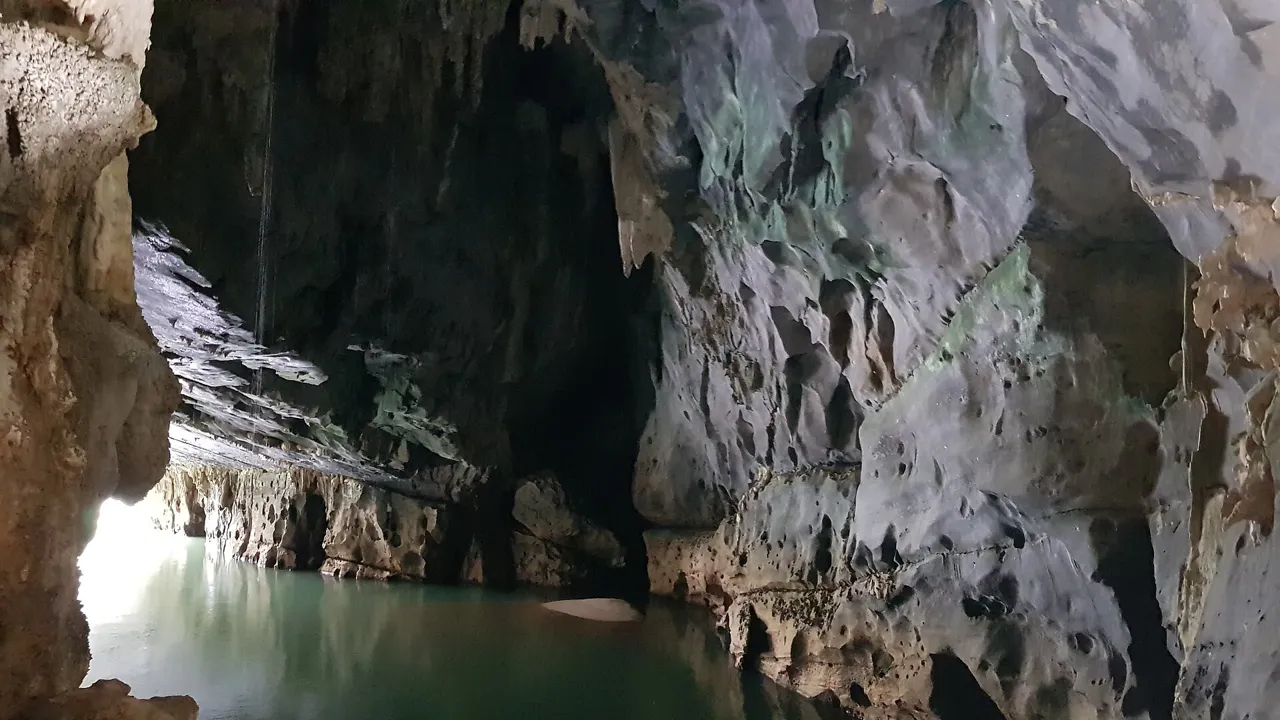
Booking: what to arrange ahead
Day-ticket caves. Usually bought on the day at the landing or entrance. Arrive early at weekends and holidays.
Activity caves. Book a day or more ahead in peak season.
Multi-day trips and Hang En. Book weeks or months ahead. Check fitness requirements, age limits, what is included, cancellation rules and weather policies.
Son Doong. Book with Oxalis Adventure, which runs the commercial expeditions, and check its current season, prerequisites and cancellation terms on its own page. No guaranteed booking horizon exists; the operator says places sell fast. Be wary of third parties offering Son Doong places without making clear whose expedition you are joining.
When comparing operators, ask about licences, guide training, safety equipment, group size, porter and staff conditions, and what happens if a trip is cancelled because of weather. The accommodation link in this guide is an ordinary search, not an affiliate link and not an endorsement.
Packing by cave type
For every cave:
- Shoes with good grip. Cave floors and stairs are often wet and slippery.
- Water. Climbing stairs in humidity is dehydrating.
- Light layers. Caves are cooler than outside, especially when wet.
- Small cash in dong. For tickets, boats, drinks and tips.
For Dark Cave and wet caves:
- Swimwear and quick-dry clothes. You will be wet and muddy.
- Water shoes or strapped sandals. For wading over rock.
- Waterproof pouch. For phone and valuables, or leave them behind.
- Change of clothes. For afterward.
For multi-day trips: follow the operator's kit list, which usually includes trekking shoes, quick-dry clothing, a headlamp and personal items.
Seasonal: a rain jacket from September to December; sun protection and extra water from April to August; insect repellent all year for the forest.
Two or three days in Phong Nha
Day one, morning. Phong Nha Cave by boat, then Tien Son if you are comfortable with stairs. The boat trip in the morning is cooler and quieter.
Day one, afternoon. Rest, or cycle in the farmland around Phong Nha town.
Day two, morning. Paradise Cave, arriving early to climb the stairs before heat.
Day two, afternoon. Dark Cave if you want activity; otherwise a short forest walk with a guide.
Day three. An overnight trip such as Hang En, if booked, or a rest day before onward travel.
Adjustments. If river levels suspend a boat trip, consider another cave only after the operator and current local advice confirm that its approach roads and visitor route remain open. A “dry” cave is not an automatic flood-day alternative. In severe flooding, follow local instructions and postpone outings. In heat, reduce exposed stair climbing and rest. With limited mobility, confirm boarding, steps and transfers for the specific trip before booking; a mostly seated boat journey does not establish accessible boarding.
Our Bemaraha guide looks at another protected limestone landscape, where routes and seasonal access are part of the story.
Reading before and after
The UNESCO World Heritage Centre page for Phong Nha-Ke Bang National Park and Hin Nam No National Park is the best free starting point on the geology, the biodiversity extension and the 2025 transboundary listing. The Vietnam National Authority of Tourism's Phong Nha page gives the national tourism view of the area and its seasons. For background on caves and karst, Ford and Williams's textbook on karst hydrogeology and geomorphology is a standard technical reference. For Son Doong, Oxalis's own expedition page is the primary source for its current terms; reports from caving associations give the exploration history. Book recommendations are based on publisher descriptions, not on reading the books for this guide.
For other karst landscapes, see Tsingy de Bemaraha. For a place where exploration recently changed what is known, see Makay.
A managed cave visit has a very different history from the human-cut spaces of Derinkuyu. That contrast is a useful reminder to ask how each underground landscape was made.
Questions that come up
Can I visit Son Doong without an expedition? Not as far as this guide could establish. Commercial access is by Oxalis Adventure's multi-day expedition, with age and fitness prerequisites.
Does the Laos extension mean I can visit Hin Nam No from Phong Nha? No. The shared World Heritage listing is not a route or a permit; Hin Nam No is reached and managed from Laos.
What if my cave trip is cancelled for weather? Ask about refunds or rescheduling under the written booking terms. Choose an alternative only if its roads, visitor route and current operations are independently confirmed open. During severe flooding, postponing the outing is preferable to treating another cave or a valley walk as automatically available.
Which cave is best for families? Phong Nha Cave by boat and Paradise Cave suit most families; check age limits for activity caves.
Can I do several caves in one day? Two is comfortable; more is rushed.
Is it worth visiting in the rainy season? Yes, with flexibility. Some activities will be suspended.
Can I explore caves on my own? No. Independent caving is dangerous and not permitted in protected areas.
Choose the cave, not the superlative
Phong Nha's reputation rests on superlatives: the largest cave passage, the longest dry cave, one of the oldest karst landscapes in Asia. But the best visit is rarely the one with the biggest number attached. It is the one that fits the season, your body and your comfort with water and darkness. A morning drifting into Phong Nha Cave on the river, or an hour on the boardwalk in Paradise Cave watching water bead on a stalactite, shows the same process that made Son Doong: rain, rock and time. Choose the underground journey that suits you, and the karst will still have explained itself.
Sources and confirmation routes
The first draft of this guide was written without live web access. Sources below were checked on 17 October 2026 during correction, by the site's director or by this writer as noted; other claims are marked in the text where uncertain.
- UNESCO World Heritage Centre — Phong Nha-Ke Bang National Park and Hin Nam No National Park: current property name; Lao extension approved 2025 (director's check; the page returned an access error to this writer).
- Vietnam National Authority of Tourism — Phong Nha: 300-plus caves; about 45 km from Dong Hoi airport; February–August recommended; September–December flood-prone.
- Oxalis Adventure — Son Doong Cave Expedition: operator's own duration, group size, season, age and fitness requirements, inclusions, listed price, cancellation terms and weather clause.
- Đại biểu Nhân dân — text of Resolution 202/2025/QH15: Quảng Bình and Quảng Trị combined as Quảng Trị.
- Not verified: day-cave prices and boat rules, Paradise Cave length and boardwalk figures, Son Doong licensing and any annual cap, discovery-history dates, Dark Cave activities as currently run.
Photograph credits
- Phong Nha Documentary 1 · Genghiskhanviet · 2007-07-10 · Public domain. Resized and converted to WebP; the hero may be cropped by the layout. These adaptations remain available under their respective licences.
- Phong Nha Documentary 2 · Andre Hospers · 6 March 2025 (according to Exif data) · CC BY 4.0. Resized and converted to WebP; the hero may be cropped by the layout. These adaptations remain available under their respective licences.
- Phong Nha Documentary 3 · Andre Hospers · 6 March 2025 (according to Exif data) · CC BY 4.0. Resized and converted to WebP; the hero may be cropped by the layout. These adaptations remain available under their respective licences.
- Phong Nha Documentary 4 · Andre Hospers · 6 March 2025 (according to Exif data) · CC BY 4.0. Resized and converted to WebP; the hero may be cropped by the layout. These adaptations remain available under their respective licences.
- Phong Nha Documentary 5 · Andre Hospers · 6 March 2025 (according to Exif data) · CC BY 4.0. Resized and converted to WebP; the hero may be cropped by the layout. These adaptations remain available under their respective licences.
Packing graphics: AI-generated editorial illustrations. Portrait supplied by Sok Heng Oeun.
A closer look.
The place, its details and its setting in dated photographs. Historical views do not establish today’s access or visitor conditions.

Sok Heng Oeun
Sok Heng Oeun is the owner and editor of Hidden Corners. The Hidden Corners Editorial Team supports image preparation and editorial checks under his direction.
Sok Heng Oeun on Facebook ↗AI-assisted preparation · Editorial review by Sok Heng Oeun, 19 October 2026. This article does not claim a firsthand team visit.