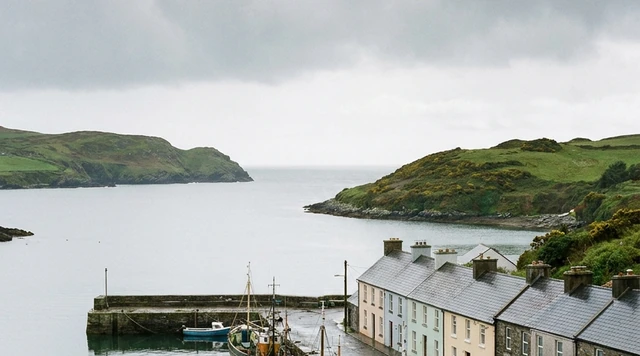
AI illustration
 Edited by
 The phrase everyone repeats is that an Icelandic winter day gives you four or five hours of light. On the December solstice in Reykjavík the sun is above the horizon for four hours and eight minutes — and civil twilight, which is enough light to drive and to see weather coming, runs for six hours and forty-six. Both halves of that sentence matter. Plan on four and you waste the day; plan on eight and you finish it in the dark, on ice, in a car you have owned for two days.
What this is, and what it is not
This is desk research. Nobody from this publication drove these roads last winter. It is built from the Icelandic Road and Coastal Administration, the Icelandic Meteorological Office, ICE-SAR, the US Naval Observatory, Icelandic statute and regulation, the Safety Investigation Authority, and — for the parts only a contract can tell you — the published terms of licensed rental operators. Where two sources disagree, both are named.
It is the method note behind our Iceland dossiers — Skaftafell, Sólheimajökull, the Katla cave — because each of those places sits at the end of a winter drive, and the drive is the largest risk on the itinerary.
The day, measured
Take Reykjavík, 64.13°N, and the US Naval Observatory's tables for the coming winter. Iceland keeps UTC all year, so these are wall-clock times with no daylight-saving arithmetic to do.
- 1 November 2026 — sunrise 09:10, sunset 17:10. Eight hours of sun; civil twilight 08:17 to 18:03, so nine hours forty-six of usable light.
- 1 December — sunrise 10:45, sunset 15:47. Five hours two minutes; civil light 09:35 to 16:57.
- 21 December, the solstice — sunrise 11:21, sunset 15:29. Four hours eight minutes of sun; civil light 10:02 to 16:48, six hours forty-six.
- 1 January 2027 — sunrise 11:19, sunset 15:43. Four hours twenty-four.
- 1 February — sunrise 10:08, sunset 17:14. Seven hours six.
- 28 February — sunrise 08:39, sunset 18:42. Ten hours three.
Two things fall out of that table. The first is that the recovery is fast and unevenly felt: the day gains about five minutes through January and about six and a half minutes a day through February, so a trip in the second half of February is a different proposition from the same trip six weeks earlier. The second is that the north is not the south. At Akureyri, on the same solstice, the sun rises at 11:39 and sets at 14:42 — three hours three minutes — with civil light from 10:03 to 16:18.
What no table conveys is the angle. At Reykjavík's latitude the midwinter sun climbs to about two and a half degrees at noon; it does not rise so much as slide along the horizon. That is why the light is beautiful and why it is a hazard: for most of the four hours the sun sits exactly where your eyes are, and low sun on wet ice is functionally a whiteout. The planning number is not sunrise to sunset but civil twilight to civil twilight, minus the hour you spend driving into the glare.
The road map says what happened, not what will
Iceland's live road status is umferdin.is, run by Vegagerðin, the Icelandic Road and Coastal Administration; road.is now redirects to it. The categories are precise and the precision is the point. The administration's own definitions:
- Easily passable — a non-slippery surface, or at least one wheel track free of ice in each lane.
- Spots of ice — ice or packed snow on up to 20% of the stretch.
- Slippery — hard ice or snow on more than 20% of the stretch.
- Extremely slippery — ice glaze, a transparent sheet, or wet ice, or wet packed snow.
- Snow — a layer up to 10 cm of ice, wet snow or loose snow.
- Difficult driving — 10 to 20 cm of loose snow and occasional small drifts.
- Impassable — snow deep enough that a normal vehicle cannot pass, or blocked by landslide or flood.
- No winter service — the road is not cleared and conditions are not monitored at all.
Read that list again with a rental car in mind. “Spots of ice” is the friendliest-sounding entry on the map and it permits one kilometre in five to be sheeted ice. And the two most consequential categories are the ones nobody screenshots: no winter service, and the status the site gives for a serviced road outside service hours, which is that conditions are unknown.
Which brings up the timing problem. Conditions are entered by staff and contractors and appear almost immediately — but the entries are made from 07:00 to 22:00 in the winter half-year (the English page gives 1 October to 30 April) and 08:00 to 16:00 in summer. A driver leaving at 06:30 in January — four and three-quarter hours before sunrise — is reading a page last touched the previous evening. The watch stations are staffed around the clock and 1777 reaches a human; the same data runs on RÚV teletext, pages 470 to 494, which works where there is no signal.
Warnings, and who actually closes a road
The Icelandic Meteorological Office issues the colour-coded weather warnings. What a red one means in practice is documented plainly in the office's own account of 5 February 2025, when red warnings covered much of the country: gusts of 35 to 45 m/s, locally above 50 m/s near mountains, and the instruction that “travel is not advised while the warnings are in effect.” That is the ceiling of the scale. Below it sit orange and yellow, which a visitor will meet far more often, and here we have to be honest: we could not open the office's current definitions of each tier or its numerical criteria, because the warnings page renders client-side and the English site no longer carries a static equivalent. So we invent no thresholds. Read the warning text itself; the office writes an impact sentence for each region, and it is more useful than the colour.
The warning and the closure are separate acts by separate bodies, which visitors routinely conflate. The Meteorological Office forecasts. Vegagerðin decides whether a road is open, impassable or closed, from watch stations that monitor conditions twenty-four hours a day. Civil protection — Almannavarnir, working through the police — runs its own ladder of uncertainty, alert and emergency phases, and it is the police who close a road when the reason is a hazard rather than the surface. A red warning closes nothing automatically. A road can be formally open in weather no one should be out in, and that gap is where the traveller's judgement lives.
Iceland has no winter-tyre law
This is the correction that matters most, because almost every rental company's advice page states the opposite. The Icelandic requirement, set by regulation 822/2004 as amended by regulation 736/2014 and in force since 1 November 2014, is a tread-depth rule: a passenger car must have at least 3.0 mm of tread from 1 November to 14 April, against 1.6 mm from 15 April to 31 October. Emergency vehicles carry 4.0 mm in winter. Nothing there requires a tyre marked M+S, a three-peak snowflake, or anything sold as a winter tyre. A summer tyre with 3.2 mm of tread is legal in December and is also a bad idea in December; those are different statements, and conflating them has produced a great deal of confident misinformation.
Studded tyres are the other half. Under item 16.02 of the same regulation, made under Article 69 of the Traffic Act 77/2019, studs are prohibited from 15 April to 31 October — the ban is written as the closed season, not the open one — with the standing exception that they may be used outside the permitted window when conditions require it. Enforcement is light and visible in the numbers: an answer to the Althingi records 346 fines in five years, 53 in 2018, 91 in 2019, 40 in 2020, 46 in 2021 and 116 in 2022, with none issued in the fortnight after the ban began or the fortnight before it ended. The Reykjavík police have stated publicly that they will not fine drivers for studs once winter conditions have arrived in the city, while asking people to use studless winter tyres when they can, because of the road dust the studs grind up.
You will read that the studded window varies by region. We could not find a regulation that makes it so. What exists is an argument: in a 2020 ministry consultation the travel industry association SAF supported extending the period and pressed for rental fleets to be allowed studs from 1 September to 31 May, explicitly on the grounds that conditions in one part of Iceland differ sharply from another. The dates are national as far as we can establish; the regional claim appears to be a proposal that has migrated into guidebooks as a rule. If someone tells you a different window applies in the north, ask them for the regulation number.
The rest of the legal floor is short. Headlights must be lit at all times when driving, all year (Traffic Act 77/2019, Article 34). Speed limits are 50 km/h in urban areas, 80 on gravel and 90 on paved rural roads (Article 37). On packed snow the working number is often half the posted one, and the posted number has never been an instruction.
Wind, and the clause you did not read
Wind is the Icelandic hazard that has no analogue in most visitors' driving lives, and it reaches the traveller most often as a bill. Read any Icelandic rental contract and the exclusions are consistent: damage to doors and hinges caused by wind when a door is opened is covered by no waiver on sale; damage from driving through water — a river ford, a flooded dip, a beach — is covered by no policy; underbody damage from rough roads is excluded; and driving off-road voids everything. One operator's terms put a number on the wind: for a motorhome, wind damage above 15 m/s is excluded outright. Fifteen metres per second is 54 km/h, an ordinary Tuesday on the south coast, and well below the 35 to 45 m/s of a red-warning day.
The financial shape is worth knowing before the counter, not after. At one operator the standard collision waiver leaves an excess of 350,000 ISK on a car and 480,000 ISK on a motorhome, with sand-and-ash protection carrying its own 90,000 ISK excess. At another the basic excess starts at 500,000 ISK for a standard car and 600,000 for a 4x4 or van. Those figures conflict because operators differ; we quote both rather than averaging them. What does not differ is the exclusion list. Sand and ash protection — invented because volcanic grit stripped the paint off a generation of rental cars — is worth buying. It is not wind cover for doors, and nothing sold is.
The rule that follows is unglamorous: park nose into the wind, hold the door with both hands, get out on the lee side, and treat a gust forecast the way you would treat a closed road. High-sided vehicles and campervans are sails, and they are what a great many visitors book.
Off-road, and the part of the law people get backwards
Article 31 of the Nature Conservation Act 60/2013 bans driving motor vehicles off roads, and the Environment Agency's own guidance says the offence is punishable by fines or imprisonment. That much is repeated correctly everywhere, including in our own previous version of this article. What is usually left out is the exception in the same article: driving is permitted on glaciers and on snow-covered ground outside built-up areas where the ground is frozen or the snow cover is solid and no damage to vegetation or landscape results. The flat claim that driving on snow is always illegal in Iceland is therefore wrong, and we withdraw it. The rule is conditional, the condition is a judgement about the ground under the snow, and a visitor in a rental car has no business making it — not least because the contract's off-road exclusion is absolute whatever the Act permits. We could not read Article 90, which carries the penalties, and so quote no maximum fine.
The highland F-roads are a separate matter and have their own note, M-004. In winter their status on the map is generally no winter service: not ploughed, not monitored, and not a road that anybody is watching on your behalf. Treat that status, rather than a barrier, as the closure.
The travel plan, and what happens if you go quiet
SafeTravel is run by ICE-SAR, the Icelandic Association for Search and Rescue — a volunteer body of more than 4,500 members — the people who would come for you are neighbours with day jobs. Its travel plan is a mechanism rather than a gesture. You submit an itinerary with at least one location per day, your vehicle, equipment and contacts; it goes to ICE-SAR and to 112; and if you switch on trip monitoring and fail to check out, a search begins two hours after your stated end time. A new plan replaces the old one, so a change of route costs five minutes of typing.
The 112 Iceland app, from Neyðarlínan, which runs the emergency number, transmits position and makes contact possible for someone who cannot speak. Install it on the flight over rather than at the roadside: it works in the case where describing where you are, in a language you do not have, would be impossible.
What popular coverage gets wrong
Three claims, in descending order of how often they are repeated.
“Winter tyres are mandatory from 1 November to 15 April.” A major international rental brand's Iceland guidance says exactly this — that all cars must be fitted with winter tyres between those dates. The regulation says no such thing. It sets a 3.0 mm tread minimum for the period 1 November to 14 April, and the fifteenth of April is not the end of that period but the first day of the studded-tyre ban. Two different rules, two different dates, merged into a sentence that is legally wrong in both directions.
“You need a 4x4 in winter.” Four driven wheels help a vehicle start moving and do approximately nothing for stopping or cornering on ice, where tyres and speed are the whole story. The failure modes recorded by the Safety Investigation Authority are running off the road and hitting oncoming traffic: in 2025 Iceland had ten fatal crashes and ten deaths, three of them run-off-road, three head-on, one of the dead a foreign visitor. No such geometry is improved by all-wheel drive and several are worsened by the confidence it produces. Clearance and stability in drifting snow are the real argument for the larger vehicle, and they apply off the ring road rather than on it.
“The maximum insurance covers everything.” It does not cover a door taken by the wind, it does not cover water, and it does not survive off-road driving. Those three exclusions between them account for the most expensive surprises visitors report, and all three are avoidable by behaviour rather than by money.
The morning routine, and the argument for going anyway
Thirty seconds, in this order. umferdin.is for the surface, noting when the entry was made. vedur.is for wind and warnings, reading the impact text and not just the colour. safetravel.is for alerts and to update the travel plan if the day has changed. Then the honest question, which is not “is the road open” but “would a local drive this today, in this car, in this light.”
The case for the winter drive survives all of the above. The island empties; the low sun that makes the glare also makes four hours of horizontal gold. The price is the discipline: budget the light rather than the clock, let a red warning cancel a day without arguing with it, and accept that the traveller who spends an afternoon reading in a guesthouse in Vík has understood the country better than the one who made it through.
Corner Codex — M-003
- Scope
- Driving anywhere in Iceland between November and April, plus any cold snap outside them
- Sun up, Reykjavík, 21 Dec 2026
- 11:21 to 15:29 — 4 hours 08 minutes
- Usable light, same day
- Civil twilight 10:02 to 16:48 — 6 hours 46 minutes
- Same day, Akureyri
- Sun 11:39 to 14:42 — 3 hours 03 minutes; civil light 10:03 to 16:18
- The tyre law
- Tread depth at least 3.0 mm, 1 Nov – 14 Apr; 1.6 mm the rest of the year
- Studded tyres
- Prohibited 15 Apr – 31 Oct, conditions excepted; 346 fines issued 2018–2022
- Speed and lights
- 50 km/h urban, 80 gravel, 90 paved; headlights lit at all times, all year
- Road status
- umferdin.is, updated 07:00–22:00 in winter; recorded conditions, not forecasts
- “Spots of ice” means
- Ice or packed snow on up to 20% of the section. Above 20% it is called “slippery”
- Rental excess
- 350,000 ISK is a common CDW excess; some operators start at 500,000–600,000 ISK
- Never covered, anywhere
- Wind damage to opened doors, and water crossings
- Silence Index
- — not scored. This is a method note, not a place
The Traveler's Panel · checked
Changing information. Prices, permits, seasons and road access change, sometimes at short notice. Everything here is a starting point for your own confirmation — not a quote, and not a guarantee. Verify with the operator and the relevant official body before you book.
| When these rules apply | 1 November to 14 April for the tread-depth rule; the weather does not read dates |
| Solstice light, Reykjavík | Sun 11:21–15:29; civil twilight 10:02–16:48. Akureyri: sun 11:39–14:42 |
| The daily check | umferdin.is (surface) · vedur.is (wind and warnings) · safetravel.is (alerts, travel plan) |
| Legal floor | 3.0 mm tread · headlights always lit · 50 urban / 80 gravel / 90 paved km/h |
| Studded tyres | Permitted 1 Nov – 14 Apr; prohibited 15 Apr – 31 Oct unless conditions require |
| Red warning | The Met Office's own wording: travel is not advised. Gusts 35–45 m/s, locally 50+ |
| Emergency | 112. The 112 Iceland app transmits position; ICE-SAR is volunteer |
Getting there — Keflavík · Reykjavík · Route 1
- Budget light, not hours. From late November to mid-January, plan on six to seven hours between civil twilights and no more than four of actual sun, and put the one fixed appointment of the day in the middle of it.
- Check umferdin.is last thing at night as well as first thing in the morning. Entries are made between 07:00 and 22:00 in winter, so a pre-dawn reading in January is the previous evening's picture — and in January, dawn is after eleven.
- Read the warning text, not the colour. The Met Office writes an impact sentence for each region; it is more useful than the tier, and on a red day the office's own instruction is that travel is not advised.
- Register a travel plan with SafeTravel for any remote leg, with at least one location per day, and turn on trip monitoring if you want a search to start automatically — it does, two hours after your stated end time.
- Phone 1777 when the map is ambiguous, or +354 522 1100 from abroad. The same road data runs on RÚV teletext pages 470–494, which works where a data connection does not.
Indicative costs — verify before booking
| Collision excess, typical | 350,000 ISK on a car and 480,000 ISK on a motorhome at one operator |
| Collision excess, elsewhere | 500,000 ISK standard and 600,000 ISK for 4x4, van or luxury at another |
| Sand and ash protection | Sold separately; 90,000 ISK excess at one operator, zero on the top tier |
| Wind damage to a door | Not covered by any waiver on sale. The whole repair is yours |
| Water crossing | Not covered by any insurance. A single ford can cost an engine |
| Studded tyres out of season | A finable offence — 346 fines were issued between 2018 and 2022 |
What to pack
- A full-size ice scraper and a snow brush, and the discipline to clear every window and the roof rather than a porthole.
- Warm layers worn in the car, not packed in the boot. A vehicle that stops in a storm becomes an unheated metal box in about twenty minutes.
- Water, food that survives freezing, and a headtorch. Iceland's dark is not ambient — outside the towns it is total.
- A phone with the 112 Iceland app installed before you land, and a charging cable that works in the rental.
- Sunglasses. The midwinter sun sits a couple of degrees above the horizon for most of the four hours it is up, and glare off ice is a genuine hazard rather than a comfort problem.
Where to stay
Base short. The single most useful change to a winter itinerary is to halve the driving legs and double the nights per base — Vík, Kirkjubæjarklaustur, Höfn, Akureyri — so that a cancelled day costs a morning rather than a booking chain. Guesthouses along Route 1 are used to weather cancellations and generally more flexible in winter than their summer terms suggest; ask before you book, and prefer the place that answers the question about road conditions with a specific road number. Reykjavík is a poor base for anything beyond the Reykjanes peninsula and the western end of the south coast in January, because the light budget is spent before you arrive.
Safety & responsible travel
- Off-road driving is prohibited under Article 31 of the Nature Conservation Act 60/2013 and is punishable by fines or imprisonment. The Act does allow driving on frozen or solidly snow-covered ground outside built-up areas where no damage results — but your rental contract does not, and the scars from a wrong judgement outlast the fine.
- Stopping on a winter verge for a photograph is how ruts, rescues and roadside deaths happen. Use marked pull-offs; a car half on the carriageway in a snow shower is invisible.
- Turning back is not a failed day. ICE-SAR's 4,500-plus members are volunteers who leave their jobs to come and find people who kept going.
- Do not repeat the line that winter tyres are legally required in Iceland. The requirement is 3.0 mm of tread between 1 November and 14 April, and repeating the myth leaves visitors thinking a legal box has been ticked when nothing about grip has been checked.
- Open doors on the lee side, with both hands, and park nose into the wind. It is the cheapest habit in this article and the one that most often costs people money.
Nearby, and quieter
Which winter drives are realistic. The south coast on Route 1 as far as Jökulsárlón is cleared, monitored and busy, and the daylight arithmetic works if you stay along it. The north via Route 1 through Öxnadalsheiði is a different order of exposure and closes regularly. The Westfjords and the Snæfellsnes passes are for people who are prepared to sit out days. The highland F-roads carry the status 'no winter service' — not ploughed, not monitored — and are covered separately in M-004. In every case the question that matters is not distance but how many hours of civil light the leg needs.
Getting there, in order
- 1Keflavík
- 2Reykjavík
- 3Route 1
Each leg is a separate booking and a separate chance to be weathered out. Build spare days into the chain, not onto the end of it.
Sources & further reading — checked
- US Naval Observatory, Astronomical Applications Department — Sun data, Reykjavík, 21 December 2026. The December solstice figures for Reykjavík: begin civil twilight 10:02, sunrise 11:21, sunset 15:29, end civil twilight 16:48 — four hours eight minutes of sun and six hours forty-six of civil light
- US Naval Observatory — Sun data, Reykjavík, 1 November 2026. Sunrise 09:10 and sunset 17:10 at the start of the winter-tyre period, with civil twilight from 08:17 to 18:03
- US Naval Observatory — Sun data, Reykjavík, 1 December 2026. Sunrise 10:45 and sunset 15:47 three weeks before the solstice, with civil twilight from 09:35 to 16:57
- US Naval Observatory — Sun data, Reykjavík, 1 January 2027. New Year's Day sunrise 11:19 and sunset 15:43 — four hours twenty-four, and the baseline for the January rate of lengthening
- US Naval Observatory — Sun data, Reykjavík, 1 February 2027. Sunrise 10:08 and sunset 17:14 — seven hours six minutes of sun by the start of February, with civil light from 09:11 to 18:11
- US Naval Observatory — Sun data, Reykjavík, 28 February 2027. Sunrise 08:39 and sunset 18:42 by the end of February — ten hours three minutes, the figure against which the January and February rates of lengthening are calculated
- US Naval Observatory — Sun data, Akureyri, 21 December 2026. Northern Iceland on the solstice: sunrise 11:39, sunset 14:42, civil light 10:03 to 16:18 — three hours three minutes of sun
- Icelandic Road and Coastal Administration (Vegagerðin) — Road condition definitions. The official wording of every road-status category, including 'spots of ice' as ice or packed snow on up to 20% of a stretch, 'slippery' as more than 20%, and 'no winter service' as no clearing and no regular monitoring
- Vegagerðin — umferdin.is, Definitions / About. That conditions are recorded by administration staff and contractors, and that entries are made 07:00–22:00 from 1 October to 30 April and 08:00–16:00 from 1 May to 30 September
- Vegagerðin — official site, English. That the administration's watch stations monitor road conditions twenty-four hours a day year-round and coordinate response, and that umferdin.is is the public channel, with the 1777 telephone service
- Vegagerðin — Travel information, road conditions and weather. The 1777 and +354 522 1100 telephone numbers for road conditions and mountain-road opening, and the RÚV teletext pages 470–494 carrying the same data
- Icelandic Meteorological Office — Red weather warnings in effect today, no travel recommended (5 February 2025). What a red warning means operationally: gusts of 35–45 m/s and locally over 50 m/s near mountains, with the instruction that travel is not advised while the warnings are in effect
- Icelandic Meteorological Office — Viðvaranir (warnings page). The office's live warning service, which publishes warnings for the public and for emergency responders — and which renders its legend client-side, which is why this article quotes no numerical criteria for yellow and orange
- Icelandic Meteorological Office — daily solar data for Reykjavík. The national weather service's own daily table of birting, sólris, sólarlag and myrkur — twilight, sunrise, sunset and dark — for Reykjavík, and the maximum solar altitude
- Alþingi — Regulation 736/2014 amending regulation 822/2004 on the construction and equipment of vehicles (via Reglugerðasafn). The actual winter tyre rule: passenger cars must carry at least 3.0 mm of tread from 1 November to 14 April and 1.6 mm from 15 April to 31 October, emergency vehicles 4.0 mm and 2.0 mm, in force from 1 November 2014
- Alþingi — Answer of the Minister of Justice on studded-tyre fines, document 597, 153rd session. That studs are prohibited from 15 April to 31 October under item 16.02 of regulation 822/2004, made under Article 69 of the Traffic Act 77/2019, with a conditions exception; and the enforcement record of 346 fines from 2018 to 2022 — 53, 91, 40, 46 and 116
- Alþingi — Traffic Act (Umferðarlög) no. 77/2019, consolidated text. Article 34, requiring headlights to be lit whenever a motor vehicle is driven, and Article 37, setting 50 km/h in urban areas, 80 km/h on gravel and 90 km/h on paved rural roads
- Alþingi — Nature Conservation Act (Lög um náttúruvernd) no. 60/2013, consolidated text. Article 31's ban on off-road driving and its explicit exception for glaciers and snow-covered ground outside built-up areas where the ground is frozen or the snow cover solid and no damage results, with penalties referred to Article 90
- Umhverfisstofnun / Environment Agency of Iceland — Driving in uninhabited areas. The agency's statement that off-road driving is strictly prohibited and punishable by fines or imprisonment, the reason in Iceland's slow-recovering volcanic soils, and the referral to the road administration on 1777
- Lögreglan (Icelandic Police), via island.is — statement on studded tyres. That the police treat the dates as guidance, will not fine for studded tyres once winter conditions have arrived, and encourage studless winter tyres where conditions allow
- Samtök ferðaþjónustunnar (SAF) — submission to the Ministry of Transport on the studded-tyre regulation, 26 February 2020. The regulatory history behind the 'it varies by region' claim: a draft to extend the studded period, the industry's request for 1 September to 31 May for rental fleets, and the argument that conditions differ sharply between regions
- SafeTravel / ICE-SAR — Travel plan. What the travel plan collects, that it goes to ICE-SAR and 112, the requirement of at least one location per day, and that trip monitoring triggers a search two hours after the stated end time if you do not check out
- SafeTravel / ICE-SAR — official site. That SafeTravel is run by ICE-SAR, a volunteer association of more than 4,500 members operating around the clock, and that the 112 Iceland app shares GPS position with responders
- SafeTravel / ICE-SAR — Driving in Iceland. The standing road hazards a winter visitor also meets: single-lane bridges, blind rises, gravel transitions and livestock on the carriageway
- Neyðarlínan — 112 Iceland. That Neyðarlínan operates the 112 service around the clock and that the app exists to speed information transfer, including for callers who cannot describe their situation by voice
- Almannavarnir / Department of Civil Protection and Emergency Management — English pages. The three civil-protection levels — uncertainty phase, alert phase and emergency phase — and the division of labour under which the Met Office monitors and the road administration reports closures
- Rannsóknarnefnd samgönguslysa (Icelandic Safety Investigation Authority) — Traffic division annual overview 2025. Ten fatal road crashes and ten deaths in Iceland in 2025, of which three were run-off-road and three head-on, two were pedestrians, and one of the dead was a foreign visitor
- Rannsóknarnefnd samgönguslysa — traffic division annual overviews and investigation reports. The published series of annual overviews from 2019 to 2025 and the accident and incident report archive, which is the primary Icelandic record for crash causation
- Ice Rental 4x4 — insurance and protection packages (licensed operator). Practical detail only: a 350,000 ISK collision excess on cars and 480,000 ISK on motorhomes, sand-and-ash protection at a 90,000 ISK excess, and the exclusions — water damage covered by no insurance, wind damage to opened doors, and motorhome wind damage above 15 m/s
- Geysir Car Rental — insurance terms (licensed operator). Practical detail only, and the disagreement on excesses: a basic collision excess of 500,000 ISK on standard cars and 600,000 ISK on 4x4s, vans and luxury vehicles, reduced by silver, gold and zero-excess tiers
- Hertz Iceland — Iceland snow tires guide (licensed operator). Cited as the example of the error, not as authority: the claim that all cars must be fitted with winter tyres from 1 November to 15 April, which the regulation does not say
- Blue Car Rental — winter driving guidance (licensed operator). Practical detail only: the routine warning to renters that gusts over 100 km/h are possible in open landscapes, and the standard winter equipment list
Official and scientific bodies are the authority for safety, regulatory and scientific claims. Commercial operators are used only for practical detail such as tour length, meeting points and indicative pricing — never for a safety or scientific statement.
How this was made
Desk research. Compiled from official bodies, scientific and conservation sources, established journalism and licensed operators. Not based on a personal visit.
Editor’s method note — what we checked, corrected and could not verify
- Desk research only. Nobody from this publication drove Iceland last winter, and this note carries no first-hand observation of any road surface.
- Daylight figures were taken from the US Naval Observatory's rise, set and twilight tables for 64.128°N 21.827°W (Reykjavík) and 65.683°N 18.089°W (Akureyri), for the dates given, in UTC — which is Icelandic civil time all year. Durations and the rates of lengthening in January and February are our arithmetic on those tables. The statement that the midwinter noon sun sits around two and a half degrees above the horizon is also arithmetic — latitude against the obliquity of the ecliptic — rather than a quoted figure, and is given as approximate for that reason.
- The largest correction to our previous version concerns tyres. That version said winter tyres are mandatory from 1 November to 14 April. Icelandic law contains no winter-tyre mandate; regulation 822/2004 as amended by 736/2014 sets a minimum tread depth of 3.0 mm for that period and 1.6 mm outside it. Separately, studs are banned from 15 April to 31 October unless conditions require them. We have separated the two rules and the two dates.
- The second correction is legal and runs against our own earlier wording. We previously wrote that off-road driving 'including on snow-covered verges' is illegal under the Nature Conservation Act. Article 31 of Act 60/2013 in fact permits driving on glaciers and on snow-covered ground outside built-up areas where the ground is frozen or the snow cover is solid and no damage results. The prohibition is real but conditional, and we say so — while noting that rental contracts exclude off-road driving unconditionally.
- The third correction is quantitative. 'Four to five hours of daylight' understates the usable window and overstates the sun: on the solstice Reykjavík gets four hours eight minutes of sun and six hours forty-six minutes of civil light, and Akureyri three hours three. We give both numbers everywhere rather than a single round one.
- We checked the claim, common in tyre-law summaries, that Iceland's studded-tyre window varies by region. We could not find a regulation establishing regional dates and we found the likely origin of the belief in a 2020 consultation in which the travel industry argued for a longer, region-sensitive period. We report the claim as unsupported rather than as false, and name what we did find.
- Operators are used only for what a contract can establish — excesses, exclusions and packages — and never for a legal or safety claim. Where two operators disagree on the size of an excess, both figures appear.
- Things we could not verify: the current numerical criteria the Icelandic Meteorological Office uses for yellow and orange warnings, since its warnings page renders client-side and the English site no longer carries a static definition; the colour-to-category mapping on the umferdin.is map, as opposed to the text definitions, which we quote instead; the text of Article 90 of the Nature Conservation Act and therefore the maximum fine for off-road driving; Samgöngustofa's published share of injury crashes involving foreign drivers, whose statistics pages have migrated to island.is and which we could not reach; whether the 2020 draft extending the studded-tyre period was ever adopted in any form; the exact winter opening and closing dates for individual F-roads, whose road administration page was unreachable behind a certificate mismatch; whether any Icelandic authority publishes an official wind threshold at which car doors are torn off, as opposed to the 15 m/s figure that appears in a rental contract; and current 2026-27 rental excesses, which change between seasons and which anyone should confirm on the day they book.
AI is used to draft this text, and a human checks it. Tony Hall is responsible for editorial verification against the reference list. Our standard is to distinguish documented facts, disputed accounts and claims we could not verify. Errors can remain; readers can report them through the corrections page. The illustrations are AI-created and labelled as such — no photograph on this site is presented as a record of a real place. Full disclosure · Editorial policy.
Access details change — recheck before you travel. Found an error? Tell us — corrections are dated and shown in place.